
Beaches · Northwest Phuket
Nai Yang Beach: In the Shade Until Sunset
At Nai Yang, the trees have some of the best beachfront positions.
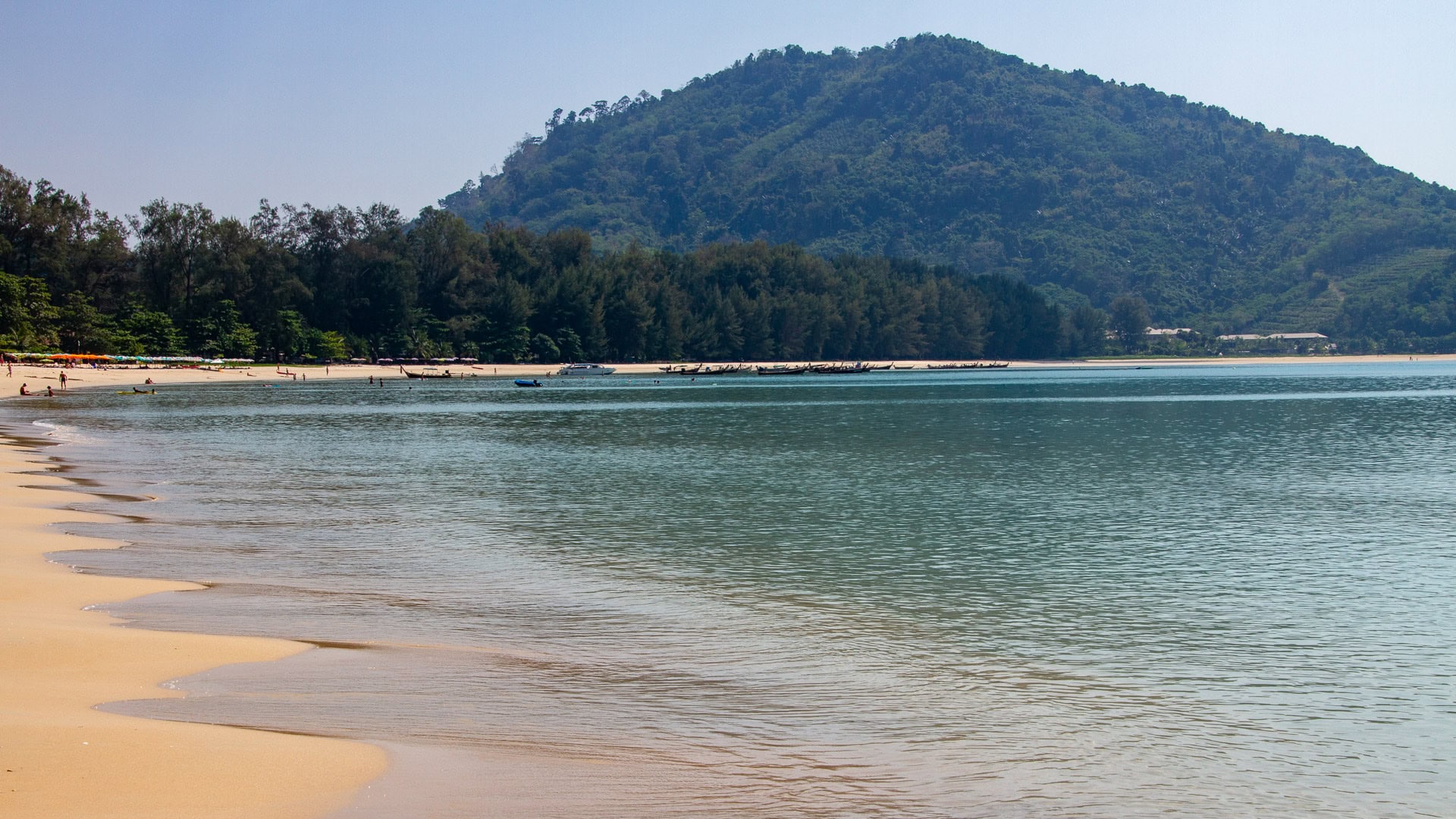
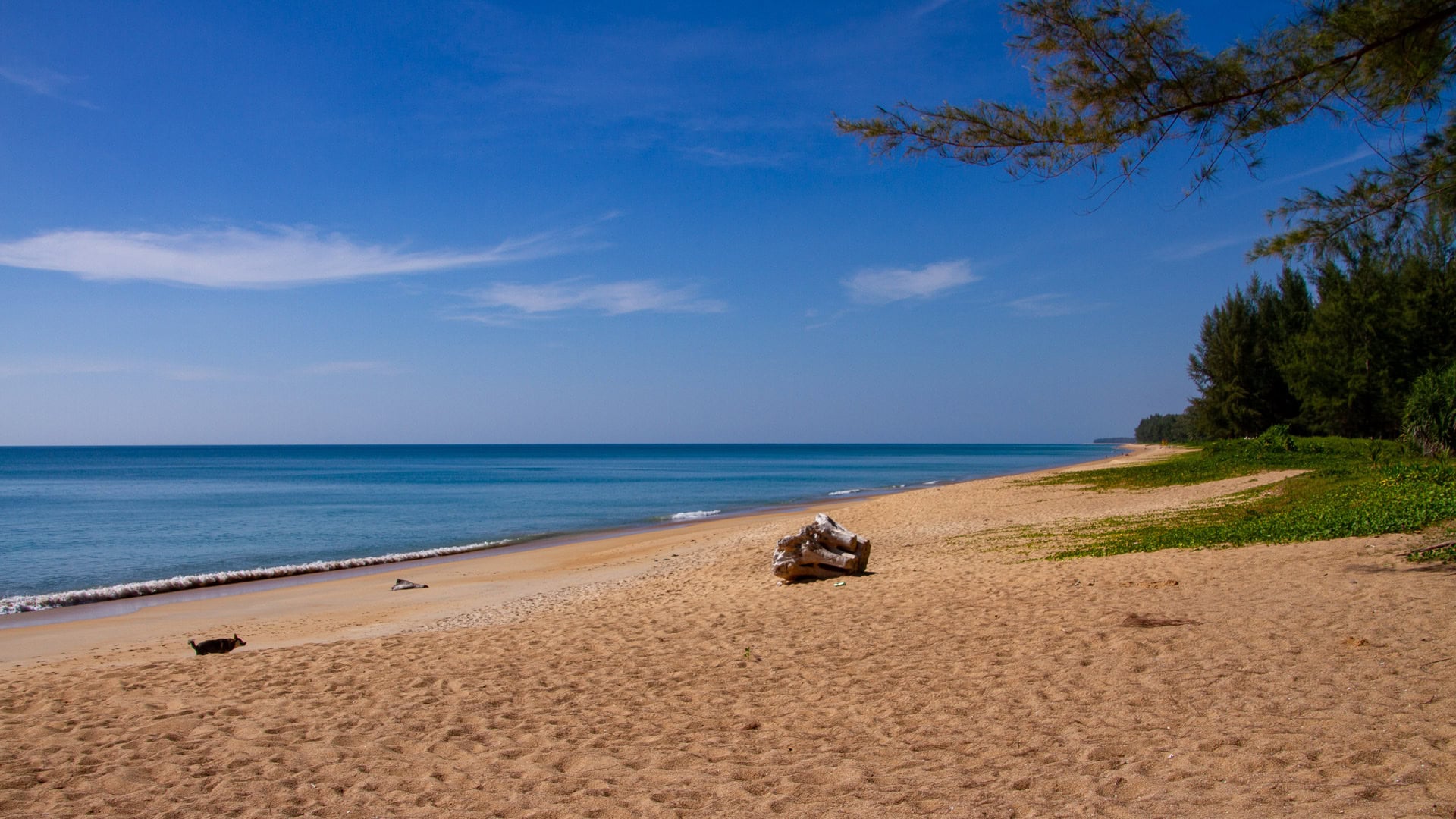
Tall casuarinas line much of the sand, providing the sort of natural shade that makes a long afternoon by the sea a pleasure. There are restaurants and little beach bars tucked beneath them, places to swim, and enough room to find a quieter corner if you prefer your own company.
And when the afternoon draws to a close, Nai Yang has another attraction. I have watched some of the finest sunsets in Phuket from this beach.
It is a place where I can quite happily spend the day.
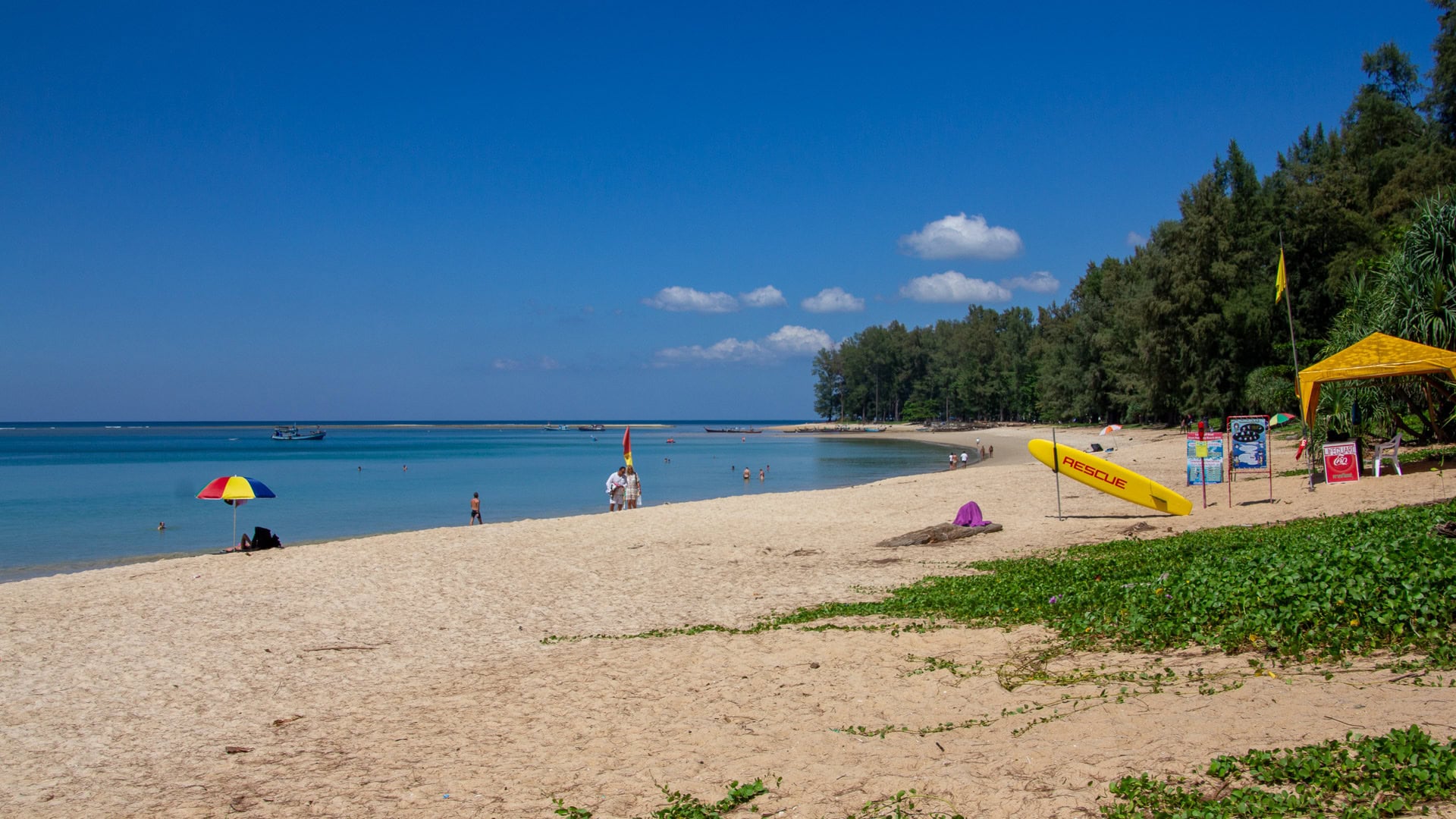
Two sides of the same beach
Nai Yang lies just south of Phuket International Airport, where the coastline curves into a broad bay. It is a very different setting from Mai Khao farther north, with its long, exposed shoreline and relatively few places to stop for something to eat.
Nai Yang has a more settled atmosphere. Restaurants and small businesses occupy the developed beachfront, while stretches of trees separate the sand from the roads and buildings behind it.
I particularly like exploring the northern part of the bay. There are smaller roads behind the beach, and if you follow them far enough, you can find places to park beneath the trees.
The northern and southern sections each have their attractions. In both, the water becomes shallow in places, particularly as the tide falls. The shoreline changes along the way, from sandy swimming areas to sections where coral and exposed seabed become part of the scenery.
What I enjoy is having a choice. You can settle near the restaurants, where there is more activity, or go farther along the beach and find somewhere quieter beneath the trees.
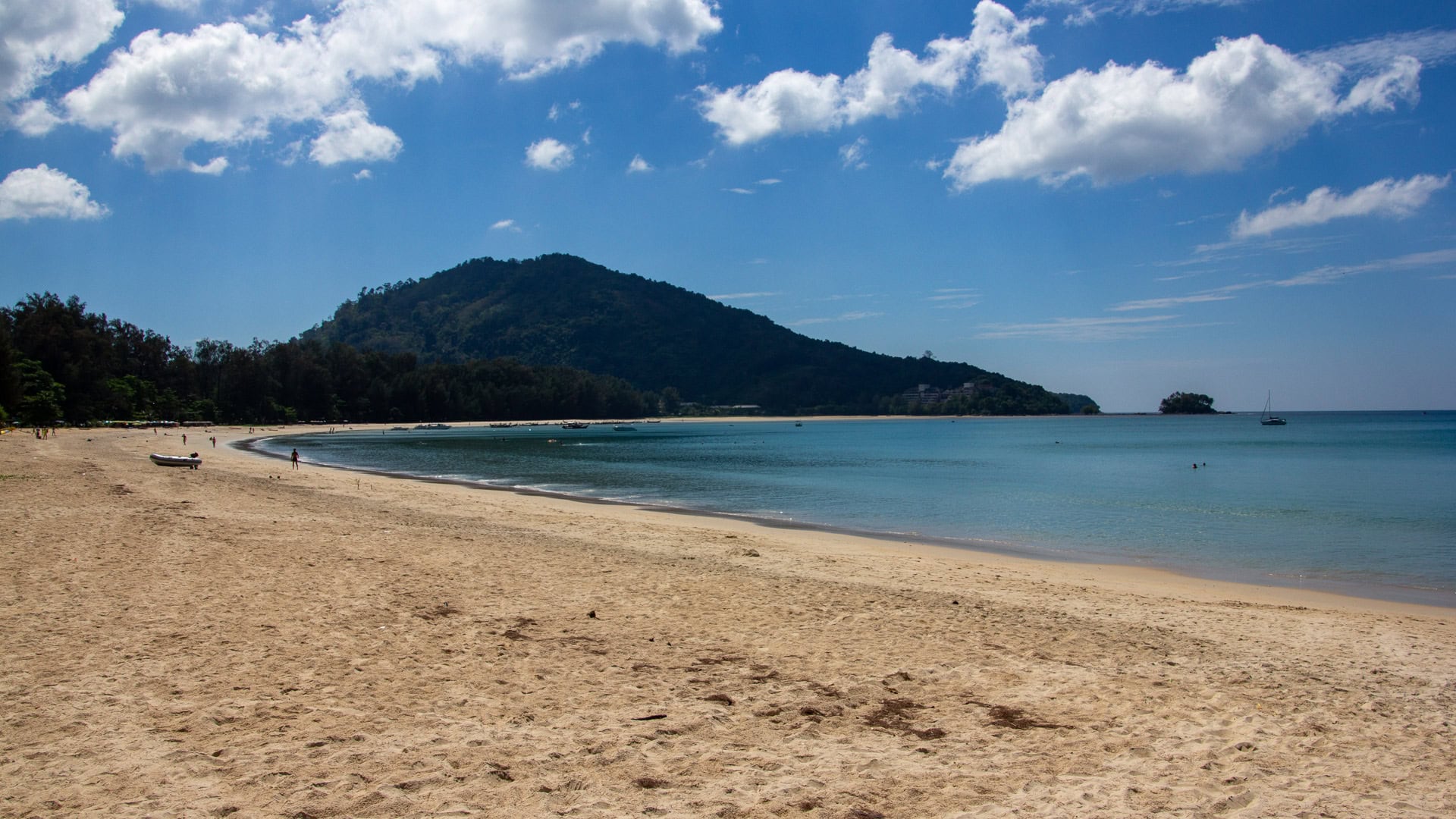
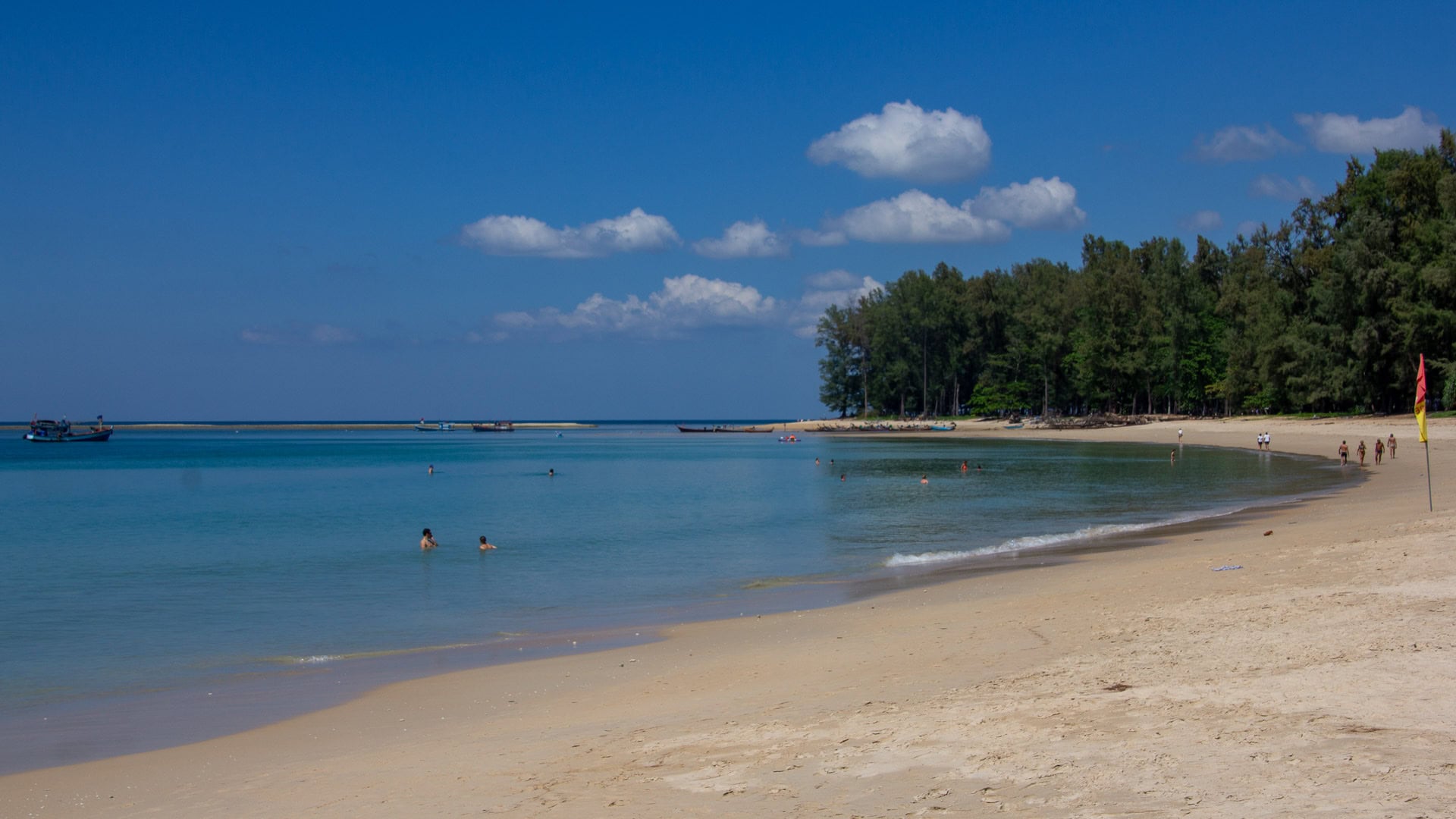
Swimming and the changing shallows
Nai Yang is a perfectly good beach for swimming, and you will often see people enjoying the water.
The bay offers stretches of sandy shoreline where swimming is part of an ordinary day at the beach. At times, the water is noticeably calmer than along Phuket’s more exposed western coast.
But the sea is not equally deep everywhere.
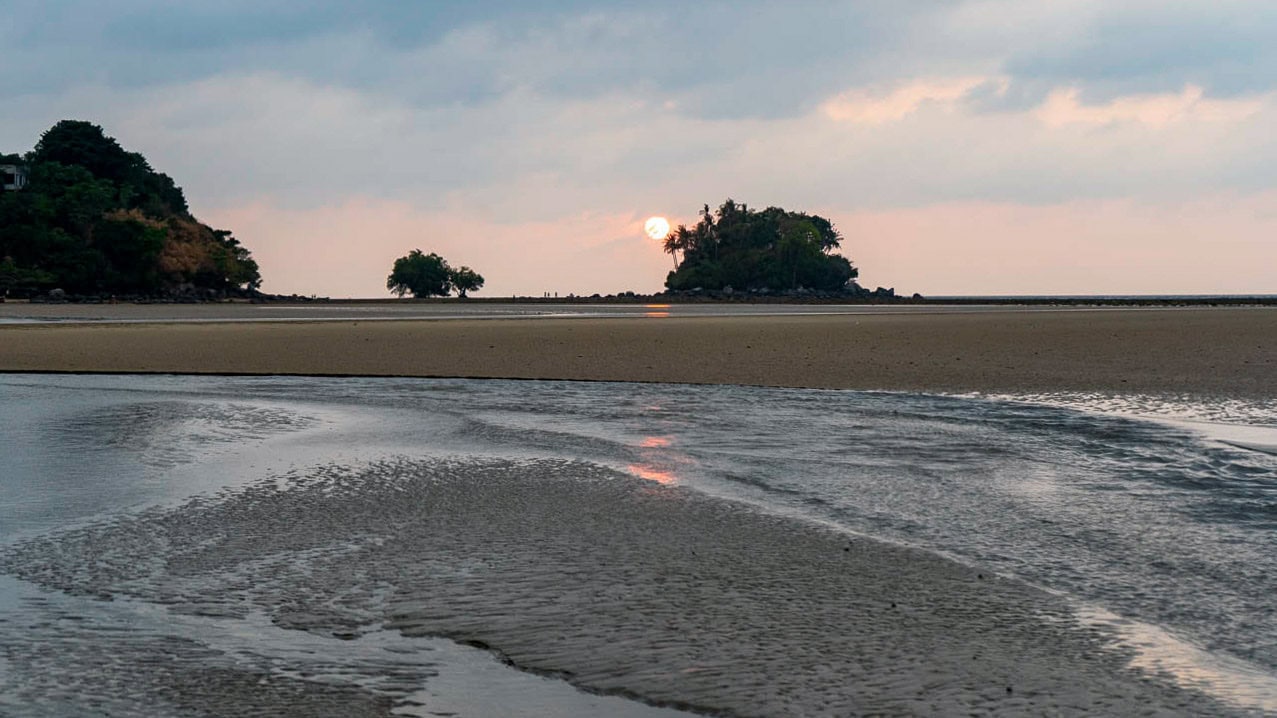
Towards both ends of the bay, shallow water extends away from the shore. Near the northern section, there is a small offshore island and an area with considerable amounts of dead coral. It is interesting to look at, although I would take rather more care walking through it than along an ordinary sandy beach.
The tide makes a difference, too. An area that looks inviting at higher water can reveal a very different seabed when the sea retreats.
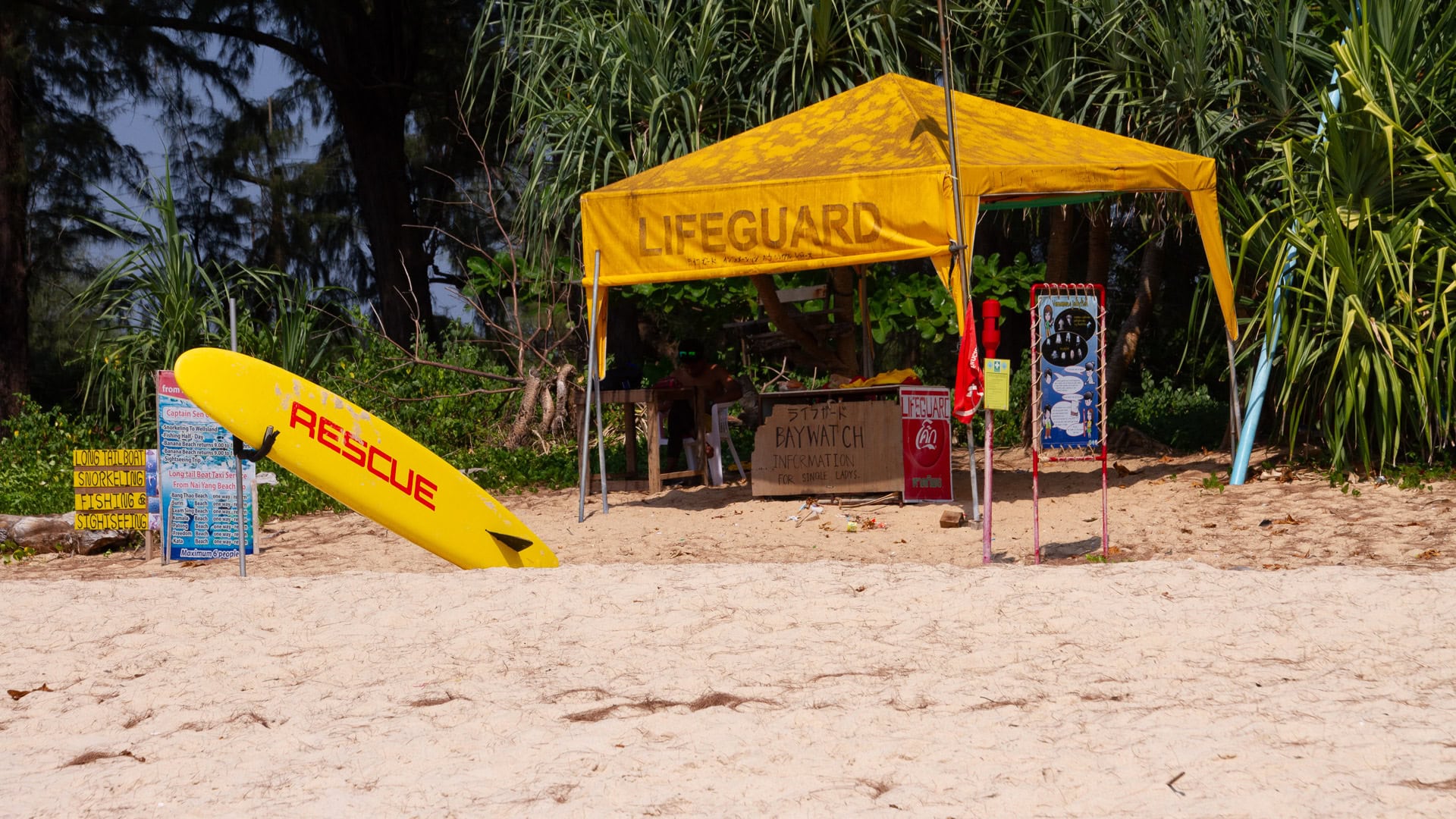
I would choose the open sandy sections for swimming and leave the coral areas alone. Lifeguards are sometimes present, although that is not something to count on every day. During the monsoon, changing waves and currents require the same attention as elsewhere on Phuket’s west coast.
There is no reason to dismiss Nai Yang as a swimming beach simply because parts of it are shallow. You just need to choose your spot.
Life beneath the casuarina trees
The trees are what I keep coming back to.
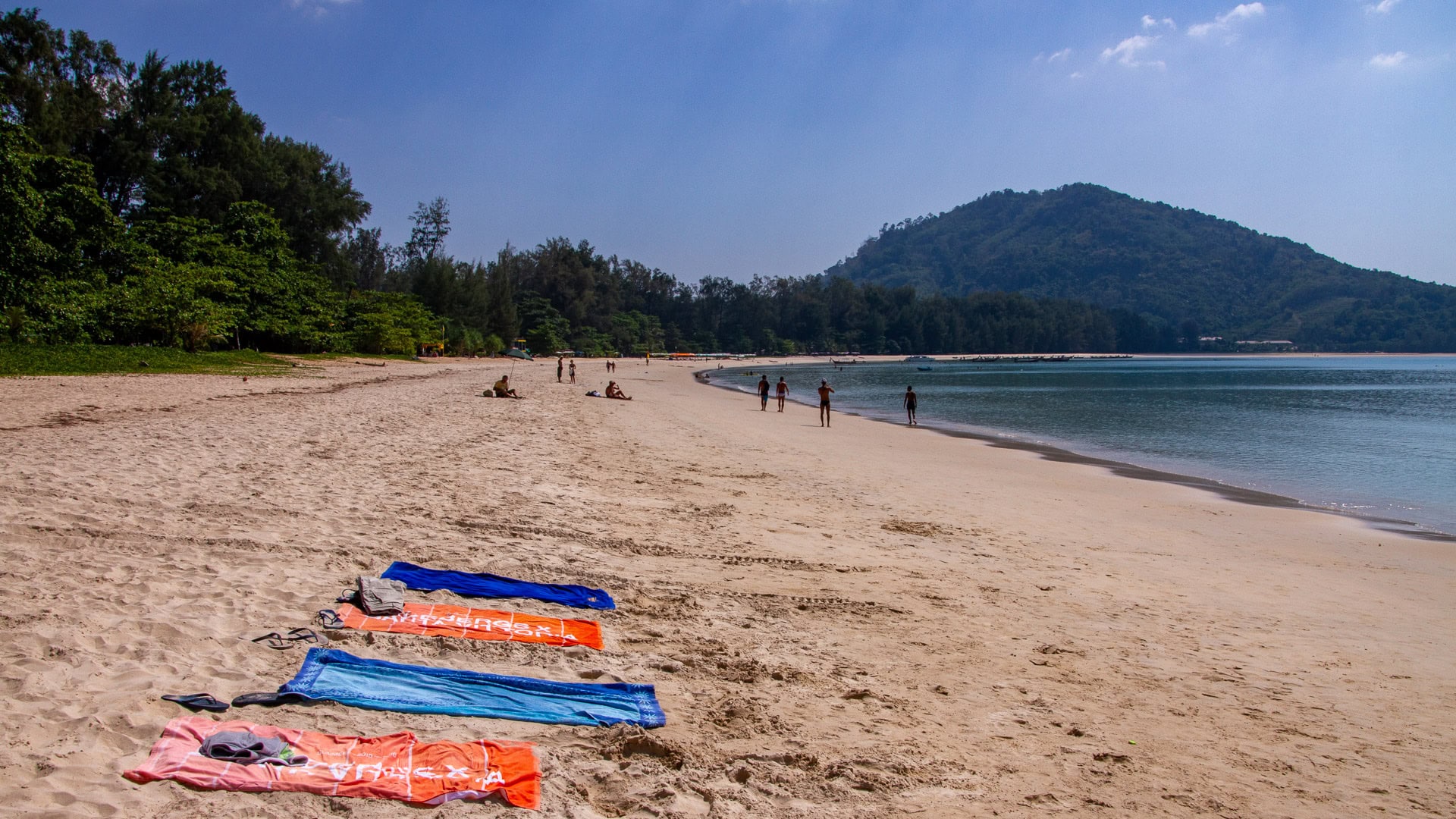
On a tropical island, natural shade is worth a great deal. At Nai Yang, you can find it close to the beach rather than retreating to a building somewhere behind the road.
The restaurants and bars make good use of that setting. Some are tucked beneath the branches, with tables facing the sea. You can stop for Thai food, seafood or a cold drink and still feel that you are spending your time on the beach.
There are restaurants around both the northern and southern sections, although the central village frontage has the greater concentration of businesses. Shops and massage places add to the easy-going atmosphere.
Nai Yang also has the occasional aircraft passing overhead, a reminder that Phuket Airport is just beyond the northern end. It is an unusual addition to an otherwise relaxed stretch of coast.
For me, the appeal is quite simple. I can swim, sit in the shade, walk along the shore and find somewhere pleasant to eat without making an expedition out of any of it.
Ko Pling and the evening light
Towards the southern end of Nai Yang, the small island of Ko Pling lies offshore.
It gives this part of the bay a distinctive view. The island breaks the open stretch of water, while the shallows around the southern shoreline change with the tide.
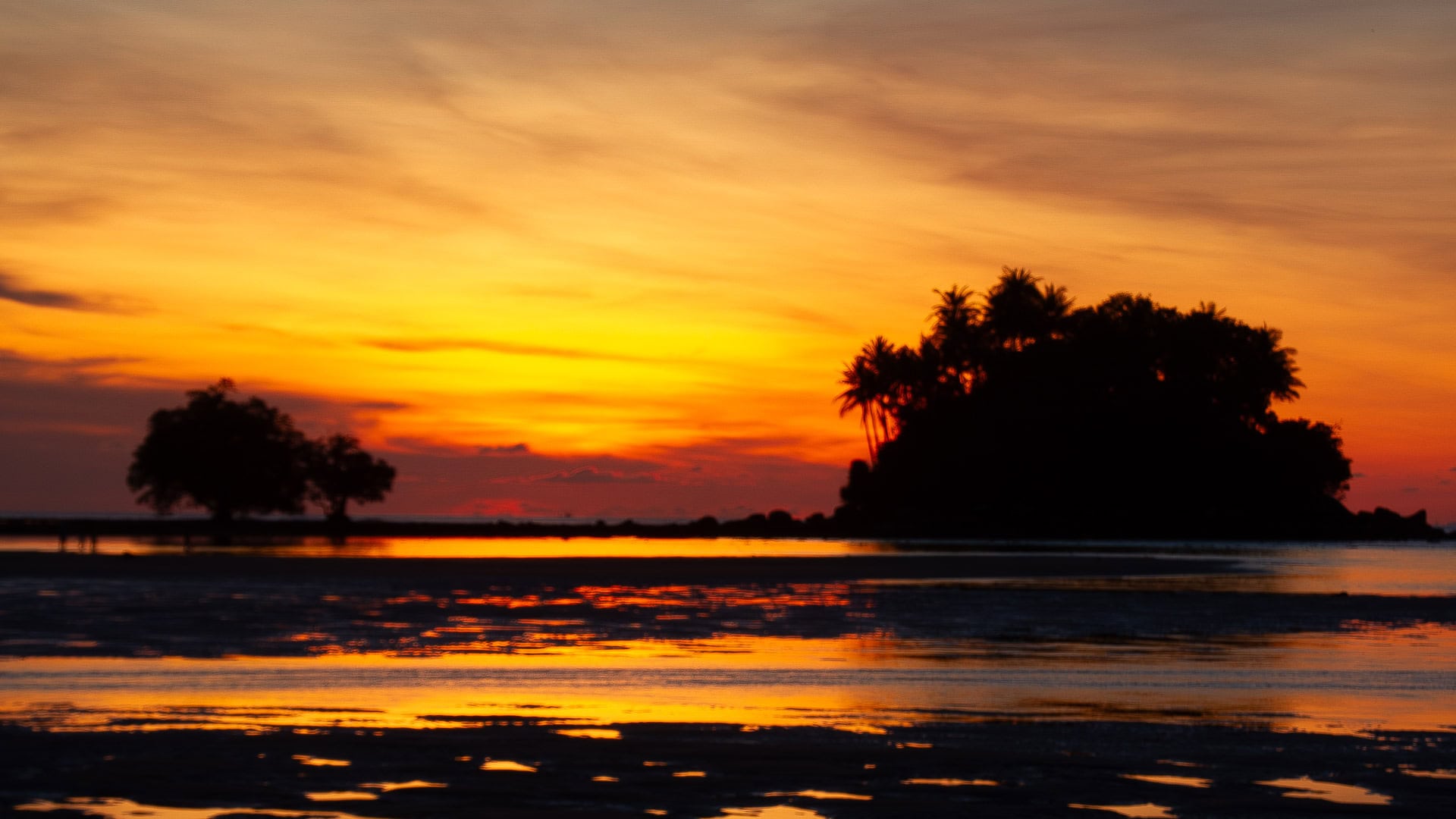
But Ko Pling is most attractive in the evening.
The sun sets over the Andaman Sea, and the little island becomes part of a much wider picture. The light changes across the water, the shoreline grows darker, and the trees that provided shade throughout the afternoon begin to frame the evening view.
I have seen many sunsets around Phuket over the years, and Nai Yang remains one of my favourite places to watch them.
You can sit on the sand or choose a table at one of the beachfront restaurants. There is something particularly agreeable about having a good sunset in front of you and dinner within easy reach.
It is difficult to think of a better arrangement.
Getting to Nai Yang Beach
Nai Yang has several approaches, and choosing the right one makes a difference to your visit.
One route passes through Sirinat National Park, where an entrance fee may be collected. In my experience, collection has been inconsistent, although visitors using an official park entrance should be prepared to pay.
You can also reach the beach by smaller roads running behind the village and shoreline, without going through the park’s ticket entrance. Google Maps is useful for finding these routes.
If you want to explore the northern section, continue beyond the obvious central beach access and look for the roads leading towards the tree-lined shore. Parking is possible beneath the trees in some places, although spaces and access conditions may vary.
The map is best used to choose the section of beach you want to visit, rather than treating a single pin as the only entrance.
Nai Yang Beach on Google Maps
Open in Google Maps. This marks the general beach area, not a verified parking place or entrance.
A beach worth staying for
I like Nai Yang because it makes spending time by the sea so easy. There is good natural shade, room to walk, places to swim and enough small restaurants and bars to keep the day pleasantly uncomplicated.
It is also a beach that rewards a little exploration. The northern and southern ends have their own character, and there is no need to spend the entire visit in the busiest section.
If you have time, stay for the evening.
Find a place beneath the trees, order something to eat, and watch the sun go down beyond Ko Pling.
That is Nai Yang at its best.
Common questions
Can you swim at Nai Yang Beach?
Yes. People swim along the sandy stretches. Both ends have shallow sections; check the tide, surf and warning flags before entering the water.
Is there natural shade?
Yes. Casuarina trees provide shade along much of the beach, although it varies with the time of day.
Do I have to pay to enter?
Not every approach passes through a ticket gate. An entrance fee may be collected at designated Sirinat National Park entrances; smaller roads also lead towards the beach.
Where can I see the sunset?
The west-facing shore has broad sunset views. Ko Pling is a distinctive island offshore towards the southern end of the bay.
Are there restaurants and public toilets?
Beachfront restaurants and bars are found along developed sections. Exact public toilet and shower access has not been reliably confirmed.
Explore nearby beaches
For a longer, more exposed stretch of coast, see Mai Khao Beach. Farther south, Naithon Beach has a different bay and shoreline. Before swimming, consult our Phuket beach safety guide.
