

Swimming in Phuket depends on the conditions at the beach that day. Stay out when red flags are flying, follow lifeguards’ instructions and use the swimming area they identify. Sunshine, clear water and a familiar beach do not establish that the sea is safe.
Safety guidance checked: 19 October 2026.
Before entering the water
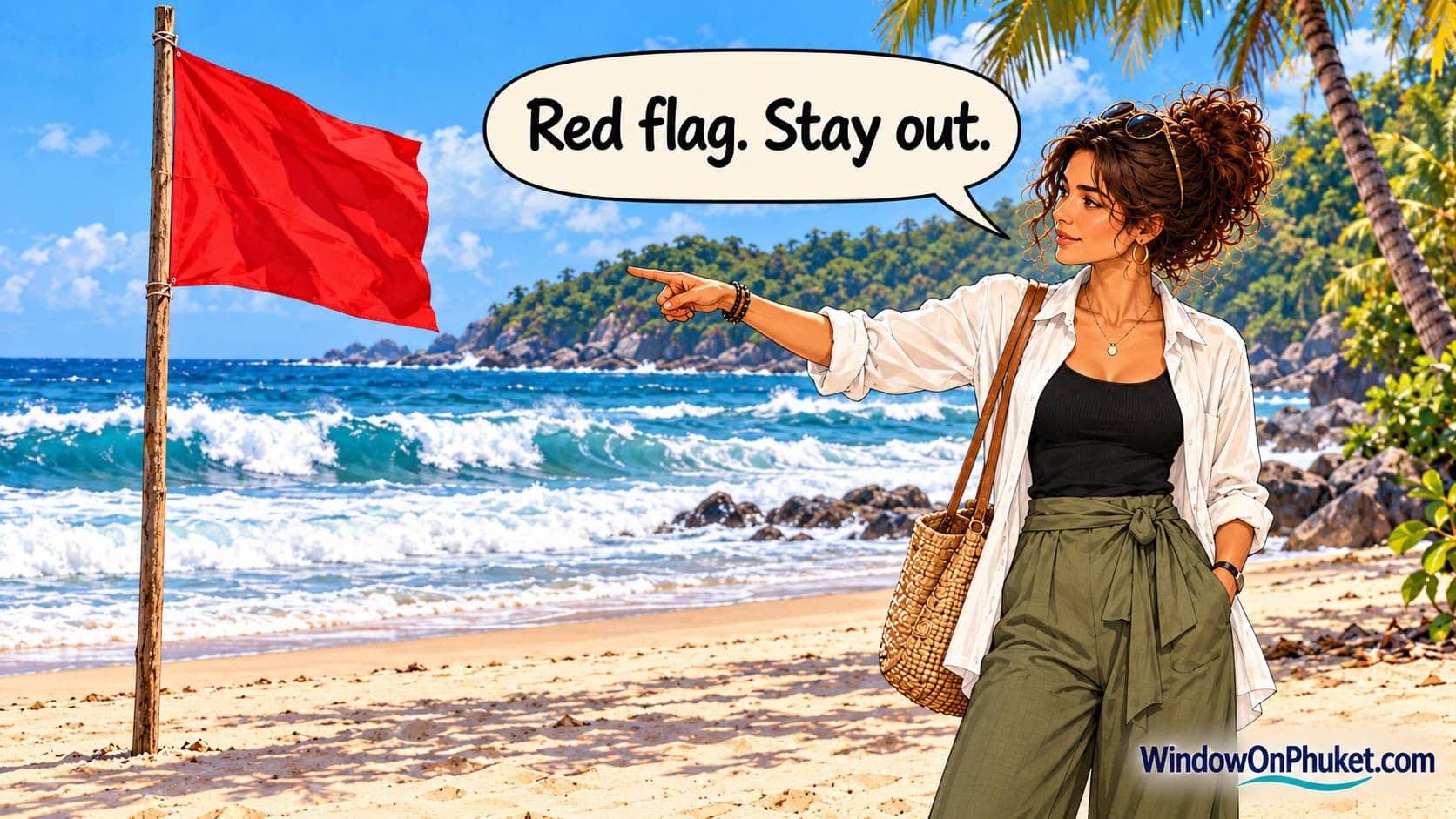
- Red flag: do not enter the water. This applies even when others are swimming.
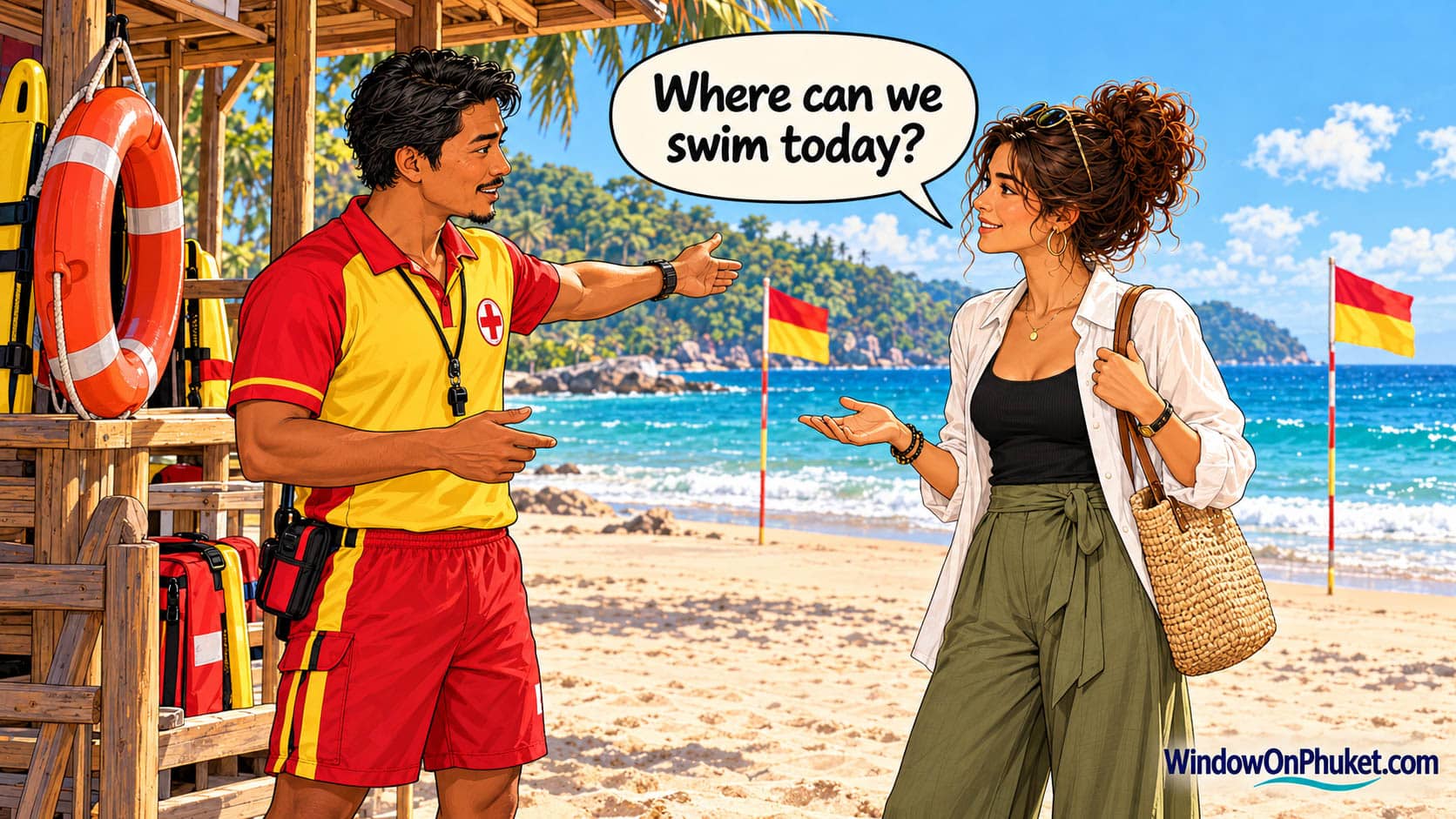
- Find the lifeguard. Ask where swimming is permitted now and stay in that area.
- Swim with company and within ability. Keep children and inexperienced swimmers closely supervised.
- Have a way to call for help. For a drowning or serious medical emergency, call 1669 and alert the lifeguard.
If the conditions or supervision are uncertain, choose a day on shore or an appropriately supervised pool.
Read the flags, then ask the lifeguard
A solid red flag means danger: do not enter. A double red flag also means the water is closed. A yellow flag signals caution; it is not an assurance that conditions suit a child or weaker swimmer.
Red-and-yellow flags are different: Thai government guidance identifies these with lifeguard supervision. Where they mark a swimming zone, ask the lifeguard to confirm its limits and stay between them.
No flags does not mean safe water. Flags, signs and patrol arrangements vary between locations. Confirm that a lifeguard is actually on duty and follow any instruction to leave the sea. A lifeguard station or an old online description does not confirm today’s cover.
Read local notices for swimming restrictions and boat or watersports areas. If the flag, notice and activity around the beach seem inconsistent, stay out and ask.
Rip currents: conserve energy and signal
A rip current is a concentrated flow carrying water away from the beach. Breaking waves push water towards shore; differences in wave breaking can channel its return offshore. A rip is a current, not a wave breaking away from the shore.
Possible clues include a darker gap between breaking waves, choppy water, or foam and sand moving out to sea. A calmer-looking gap can be the current itself. Some rips are difficult to see: spotting none is not proof that there are none.
If caught in a rip:
- Do not fight it by swimming straight back against the flow.
- Float and regain control of breathing. Conserve energy; stay with a board if there is one.
- Raise an arm and shout for help when able.
- Only if able and conditions allow, wade or swim parallel to the shore to leave the current, then return towards shore away from it. If unable, keep floating and signalling.
Seeing someone else in trouble requires a different response: alert the lifeguard and call for help. Do not swim into the same current. See the emergency steps below.
Further explanation: RNLI rip-current guidance.
The season gives context; today decides
The southwest monsoon, broadly May to October, can bring rough seas to Phuket. This is a seasonal tendency, not a rule that every day is rough or that the remaining months are safe. Conditions can change during a beach visit.
Check Thai Meteorological Department warnings and marine forecasts before setting out, then assess the beach with the lifeguard on arrival. An offshore wave forecast covers a wider area; it does not clear a particular bay for swimming.
Sunshine, a sheltered-looking bay or other people in the sea are not substitutes for this check. Leave the water when warnings change or a lifeguard asks. Avoid swimming after heavy rain and after dark.

Waves, depth, rocks and changing tides
Breaking waves at the shoreShorebreak can throw a person into the seabed and injure the head, neck or back, even in shallow water. Avoid diving headfirst into surf or unfamiliar water.
Changing depthDo not assume the bottom stays level. Ask about steep slopes, channels and drop-offs; wading out is not a reliable way for a non-swimmer to test them.
Rocky edges and accessKeep away from wave-washed rocks. Wet or algae-covered rock can be slippery. Check a shore walk’s return route before going around a headland.
Tides and thunderstormsA rising tide can cut off a route. A tide table does not predict safe swimming. If thunder is heard, leave the water and open beach for a substantial building or enclosed vehicle; an open shelter is insufficient.
Children need an adult watching closely
Give one responsible adult the clear job of watching children in and beside the water. Keep attention on them, with phones put away. A lifeguard’s presence does not replace this supervision.
Stay within arm’s reach of young children and weak or inexperienced swimmers. Do not give another child responsibility for keeping them safe. Pool swimming ability does not establish readiness for surf and currents.
A properly fitted lifejacket suitable for the wearer and activity adds protection; secure its straps. It does not make dangerous conditions acceptable or replace adult supervision. Armbands, swimming rings and inflatable toys are not substitutes.
Wind blowing from the beach towards the sea can carry an inflatable offshore. Keep beach toys out of the sea in offshore wind or rough waves, and do not chase a drifting toy.

Snorkelling needs its own checks
A mask and fins do not remove the need for swimming ability or a suitable site. Choose conditions within the group’s ability, check equipment and agree the entry, exit and return plan before entering.
Stay with a buddy who can watch and help. BSAC recommends a buddy pair in the water and a lookout on shore. Beginners should use suitable instruction and supervision rather than following a confident friend into unfamiliar conditions.
Avoid currents and boat or jet-ski traffic; stay clear of launch and landing routes. Stop when conditions deteriorate. Do not hyperventilate or compete to hold breath underwater. For other watersports, obtain activity-specific instruction and suitable safety equipment.
Jellyfish: get help promptly
Follow local jellyfish notices and stay out where warnings apply or jellyfish are washed ashore. Do not touch stranded jellyfish. Protective swimwear can reduce exposed skin, but it does not guarantee protection.
After a suspected sting, get out of the water and alert the lifeguard. Keep the person still and observed. Do not rub the area or rinse it with fresh water or alcohol.
Call 1669 urgently for severe pain, chest symptoms, breathing difficulty, confusion or collapse. If the person is unresponsive and not breathing normally, start CPR and follow the emergency instructions below.
Treatment varies by the animal involved. Ask the lifeguard or emergency clinician for immediate local treatment advice; do not delay emergency care to identify the animal or fetch supplies. Avoid applying a treatment intended for another species.
Thai public-health advice: DDC Office 11 jellyfish guidance (Thai).
If someone is in trouble: alert, call, assist safely
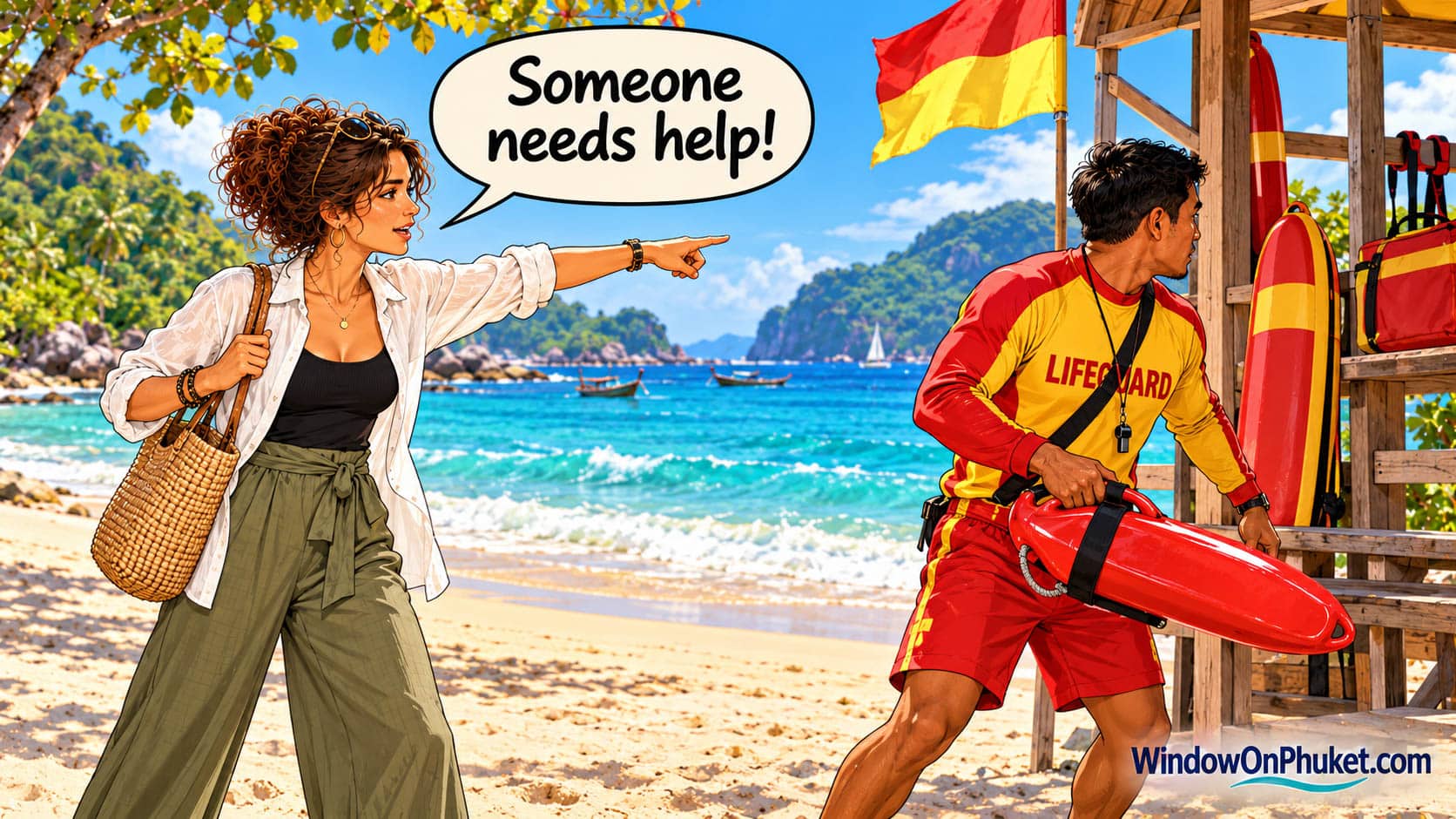
Shout for the lifeguard and call 1669 for emergency medical help. Point continuously towards the person so rescuers can locate them. Give another bystander a specific job, such as calling or meeting the ambulance.
- Say what happened: a person is struggling in the sea, has been rescued, or has a serious sting.
- Give the exact location: beach name, nearest entrance, hotel or landmark, and where on the beach. State that it is in Phuket.
- Describe the people affected: how many, approximate age, whether conscious and whether breathing normally. Give a callback number.
- Follow the dispatcher’s instructions. Have someone guide responders from the access point if possible.
Help from a secure position on shore: reach or throw suitable flotation only if this can be done safely. An untrained bystander should not enter dangerous surf or a current to attempt a rescue.
Once the person is out of the water
If unresponsive and not breathing normally, begin CPR immediately. Put the emergency call on speaker and follow the dispatcher. Rescue breaths are particularly important after drowning: give compressions and breaths if able. If unable to give breaths, start chest compressions and continue following instructions.
Ask another person to fetch an AED. Attach it as soon as available and follow its prompts; do not delay CPR while waiting for it. Continue until the person breathes normally or professional help takes over, following dispatcher instructions.
Anyone who has had breathing impairment during a water incident needs medical assessment, even if apparently recovered. Breathing difficulty after rescue needs urgent help. Do not assume the incident is over because the person is back on shore.
Tourist assistance: 1155 is the Tourist Police number. For a drowning or serious medical emergency, prioritise the lifeguard and 1669.
Medical reference: ANZCOR drowning guidance.
On shore: sun, heat and evacuation
Sun and heatUse shade, protective clothing, a hat and sunglasses. Apply broad-spectrum SPF 30 or higher to exposed skin and reapply regularly, especially after swimming, sweating or towel drying. Drink water regularly and take breaks from heat.
Ability and alcoholAvoid alcohol before and during swimming or other water activities. Leave the sea before becoming exhausted. Keep plans within the ability of the least confident person in the group.
Know the evacuation routeNotice tsunami evacuation signs and the route to higher ground or inland when arriving at a beach. Follow official evacuation instructions promptly. This is standing preparedness advice, not a current warning.
Act on natural warning signsIf an earthquake is felt near the coast, or the sea suddenly behaves abnormally, leave the shore for higher ground or inland as soon as it is safe to move. Do not wait to watch or photograph a wave. Stay away until authorities say it is safe.
Before every swim: six checks
- Read today’s flags and notices. A red flag means stay out.
- Find the on-duty lifeguard and confirm the swimming area.
- Check conditions and ability; stay out if either is uncertain.
- Arrange close supervision and stay with a swimming companion.
- Check the exit route and keep clear of rocks and watercraft.
- Know the beach location and have a way to call 1669.
For seasonal planning, read the Phuket weather and seasons guide. For wider visitor precautions, see Is Phuket Safe?, or return to Essential Phuket Travel Guides.
Sources and further guidance
Local guidance: TAT beach flags and monsoon context · TMD warnings · Thai DDC jellyfish advice · Tourist Police.
Safety references: RNLI rip currents · Red Cross swimming safety · BSAC snorkelling · ANZCOR drowning resuscitation · WHO sun protection · TMD tsunami precautions (Thai).
Guidance checked on 19 October 2026. Beach conditions and local instructions can change; check them again on the day.