
Beaches · Northwest Phuket
Banana Beach: Still Beautiful, But No Longer a Hidden Gem
There was a time when reaching Banana Beach involved a little adventure. You parked along the winding coastal road between Naithon and Layan, found a steep path through the forest and made your way down towards the sea.
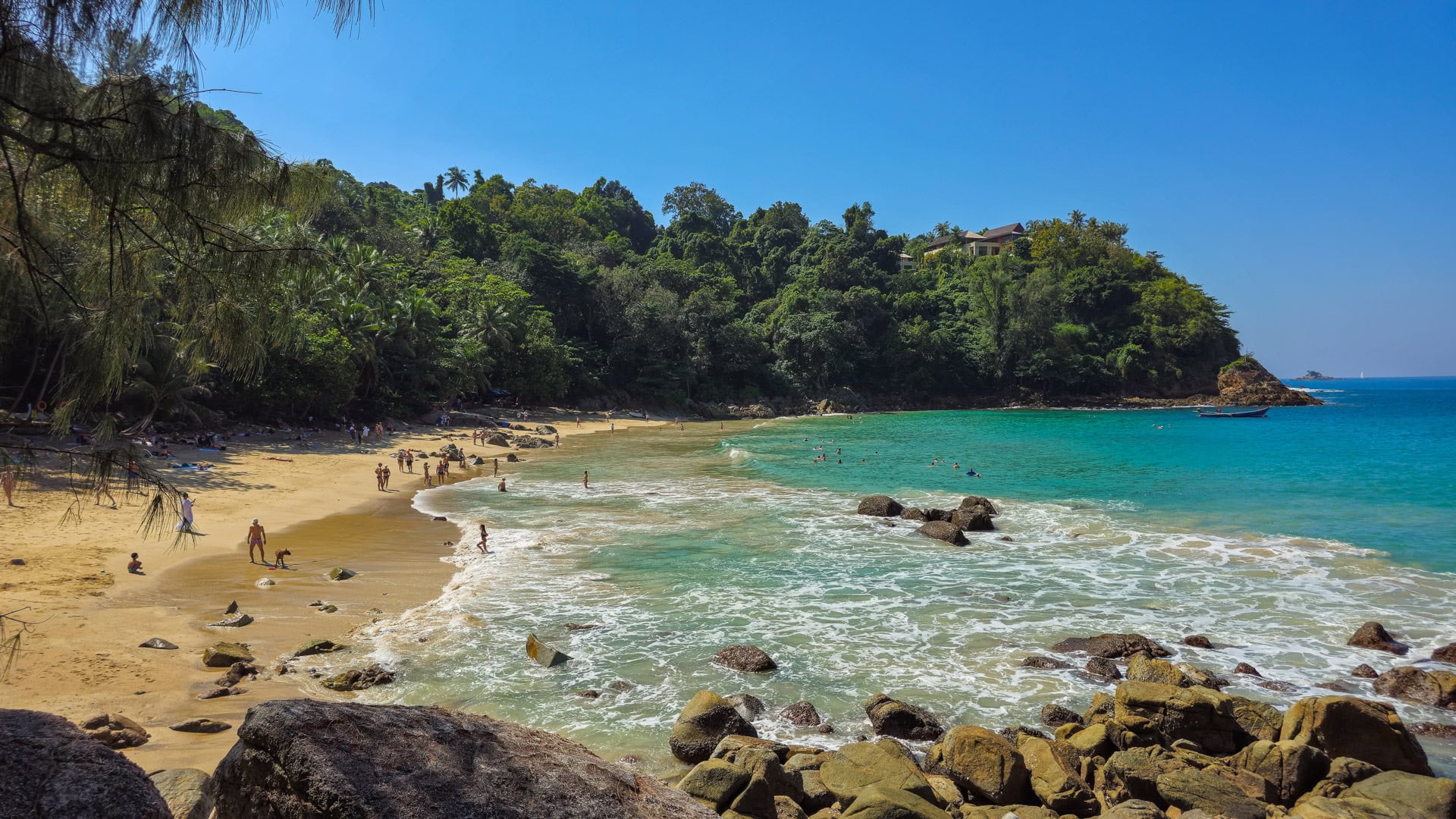
It was a fairly long walk, particularly on the way back up, but the reward was worth it. At the bottom lay a beautiful little cove, enclosed by wooded hillsides, with large boulders scattered along the sand and clear water stretching out towards the Andaman Sea.
It felt like somewhere you had discovered for yourself.
That was part of the attraction of Banana Beach. You had to make an effort to get there, and the setting made it feel wonderfully removed from the more developed beaches farther south.
These days, you can forget about the hidden-gem experience. Banana Beach has joined the beach-club business.
The good news is that the beach itself is still just as beautiful.
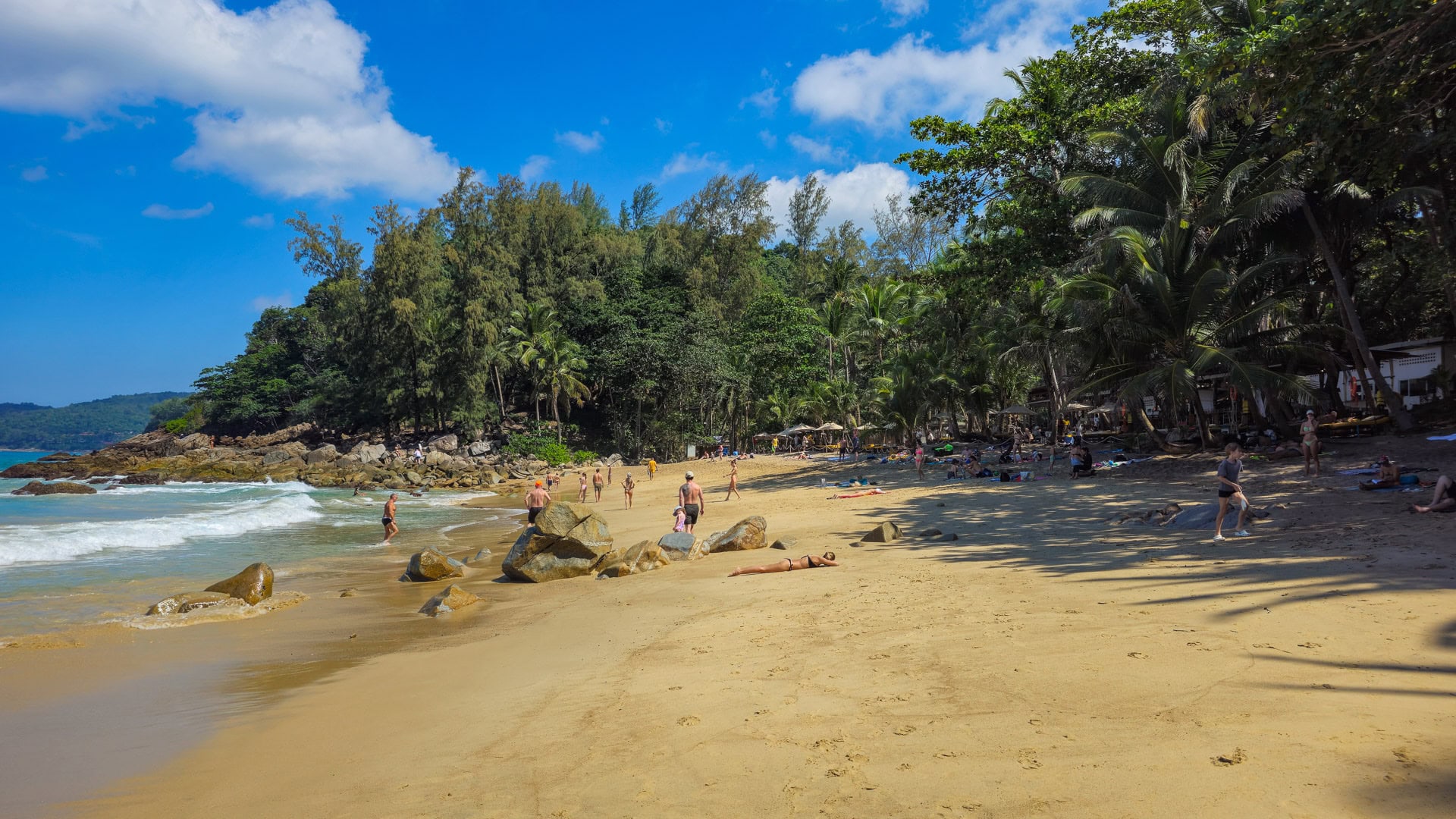
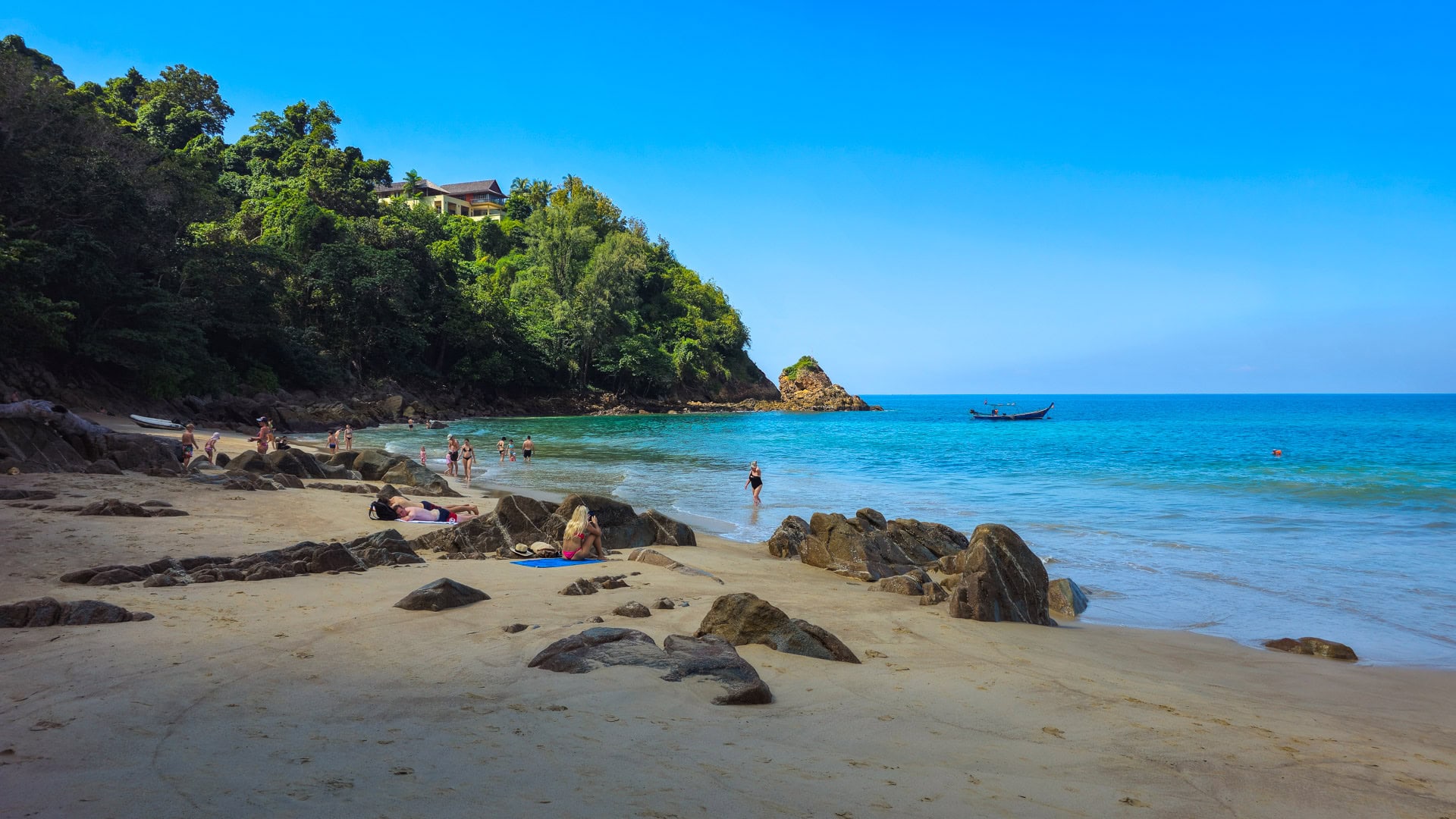
A rather different arrival
The most noticeable change is what has happened behind the sand.
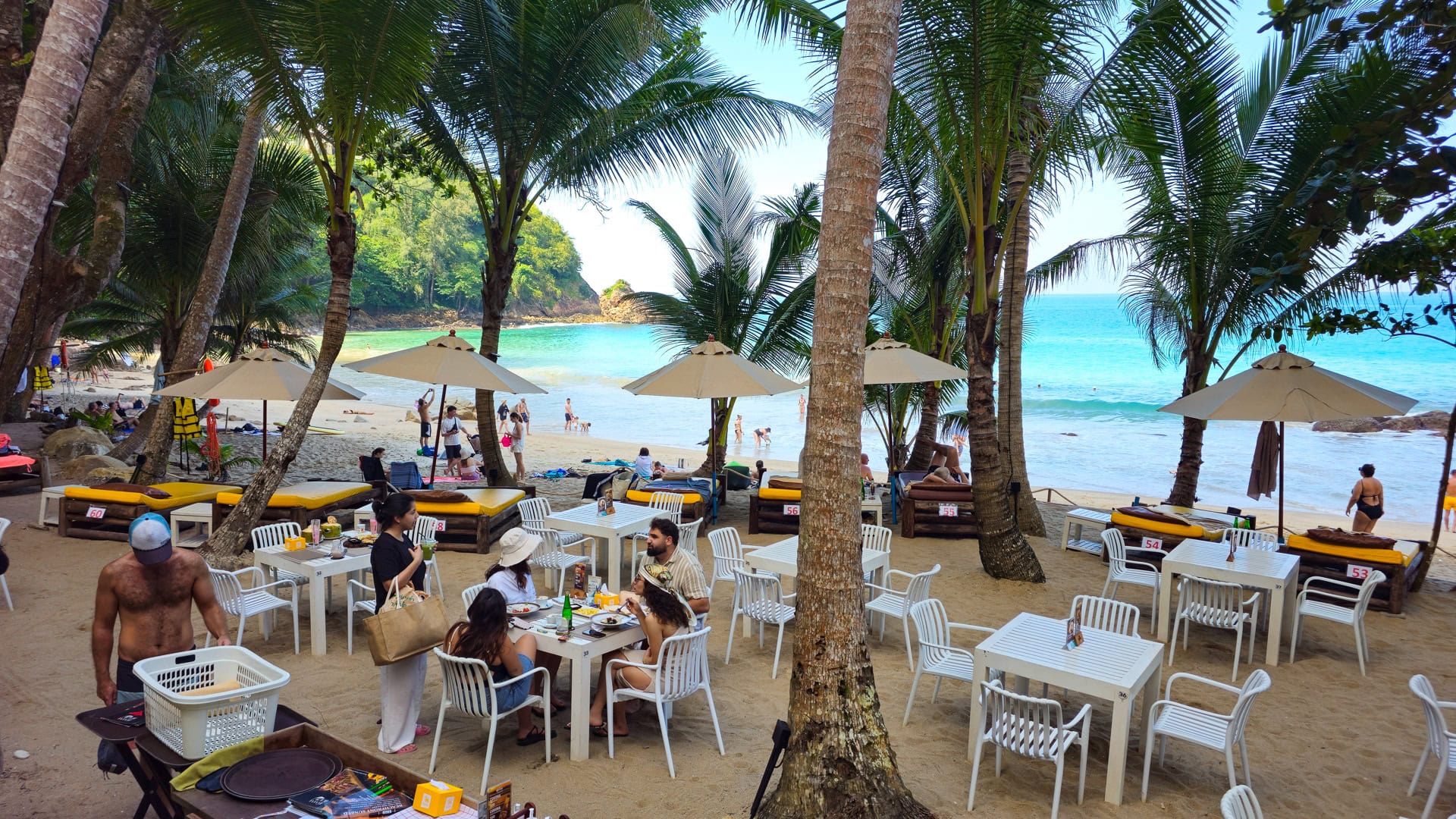
A substantial beach club and restaurant complex now occupies much of the area beneath the trees. There are dining tables, parasols, sunloungers and all the other arrangements that come with an organised day at the beach.
It is quite an impressive development, and I have to admit that it looks rather good. The buildings fit reasonably well into the tropical surroundings, even if they have replaced much of the more natural atmosphere I remember.
Whether that is an improvement depends on what you are looking for.
I liked the old Banana Beach, when getting down through the forest was part of the experience. But I can also understand the appeal of arriving at a proper car park, walking down to the sand and finding somewhere comfortable to have lunch.
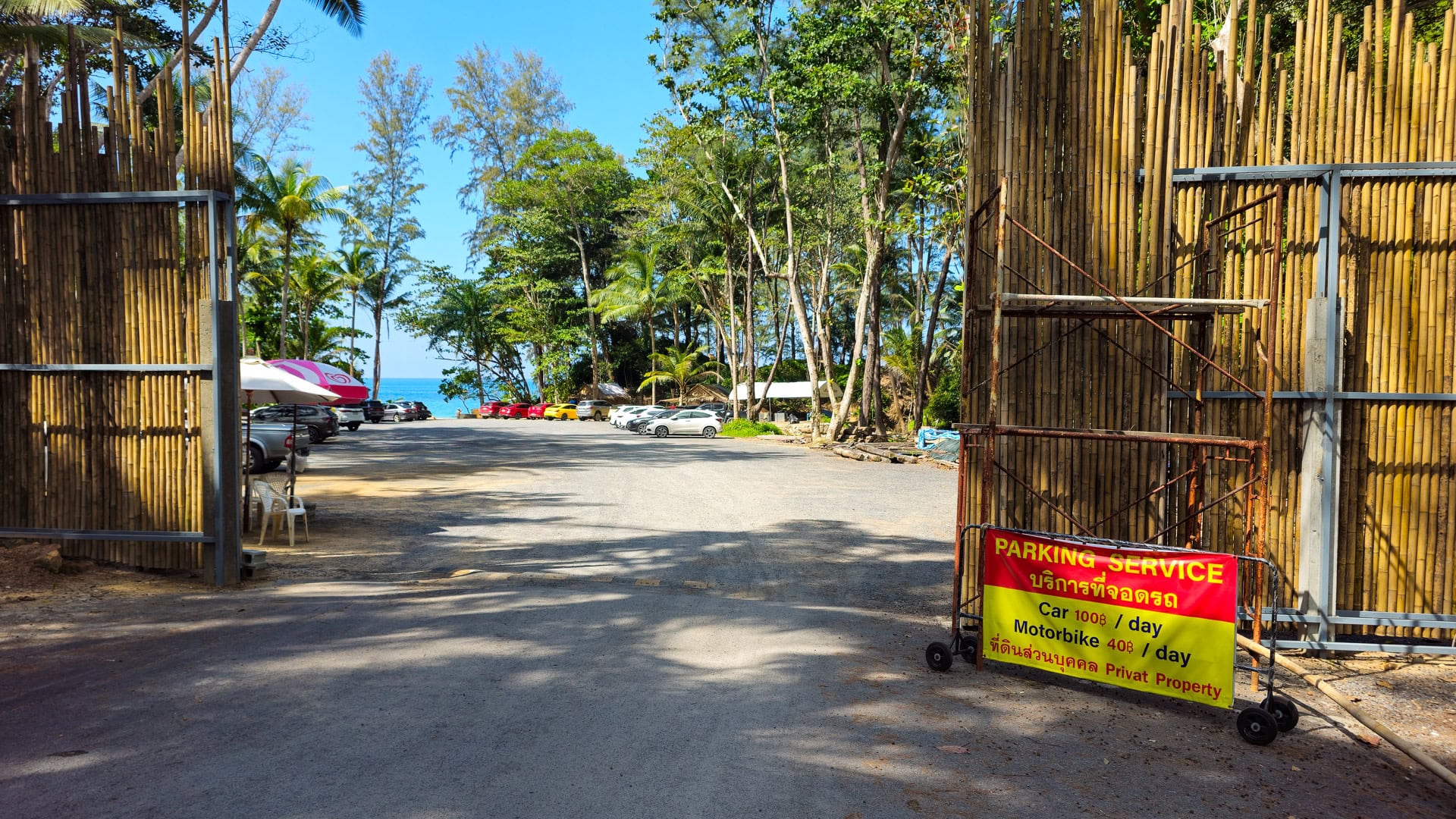
Parking along the coastal road was never particularly convenient. On busy days, finding a space could be almost as challenging as getting down to the beach. The new paid parking area is certainly a practical improvement.
And the beach has not entirely lost its old character. At the southern end, a small local restaurant was still there in 2026, a welcome contrast to the much larger development farther along the shore.
There is room for both, although I do miss the feeling that Banana Beach was somewhere you had to find rather than somewhere you simply arrived.
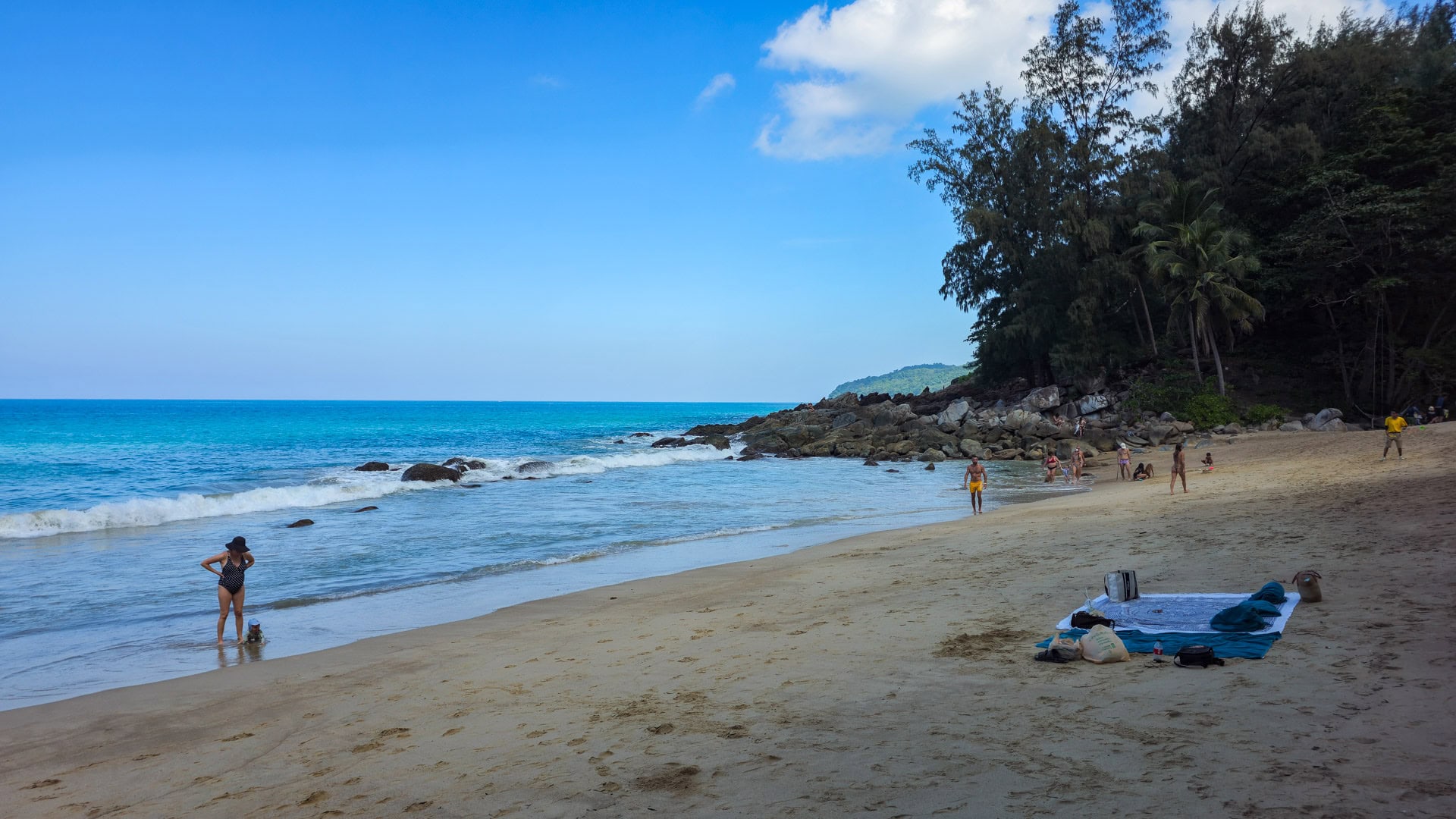
The beach is the real attraction
It would be a mistake to judge Banana Beach entirely by what has been built behind it.
The cove remains one of those lovely stretches of Phuket coastline where the landscape does most of the work. The wooded hillsides rise behind the sand, enormous rocks sit along the edges of the bay, and the water can be a beautiful shade of turquoise when the weather is right.
Unlike the long, open beaches of Mai Khao or Bang Tao, Banana Beach is compact. You can see almost the entire bay from one end, and the surrounding hills and rocks give it a more intimate character.
It is also a very pleasant swimming beach when the sea is calm. There are sandy areas where you can enter the water, although the rocks around parts of the shoreline deserve some attention.
As elsewhere on Phuket's west coast, conditions change with the seasons. During the southwest monsoon, waves and currents can make swimming dangerous. A calm day in the high season is a very different experience from a rough afternoon in August.
The development behind the beach has changed the atmosphere, but it has done surprisingly little to diminish the natural beauty of the bay itself.
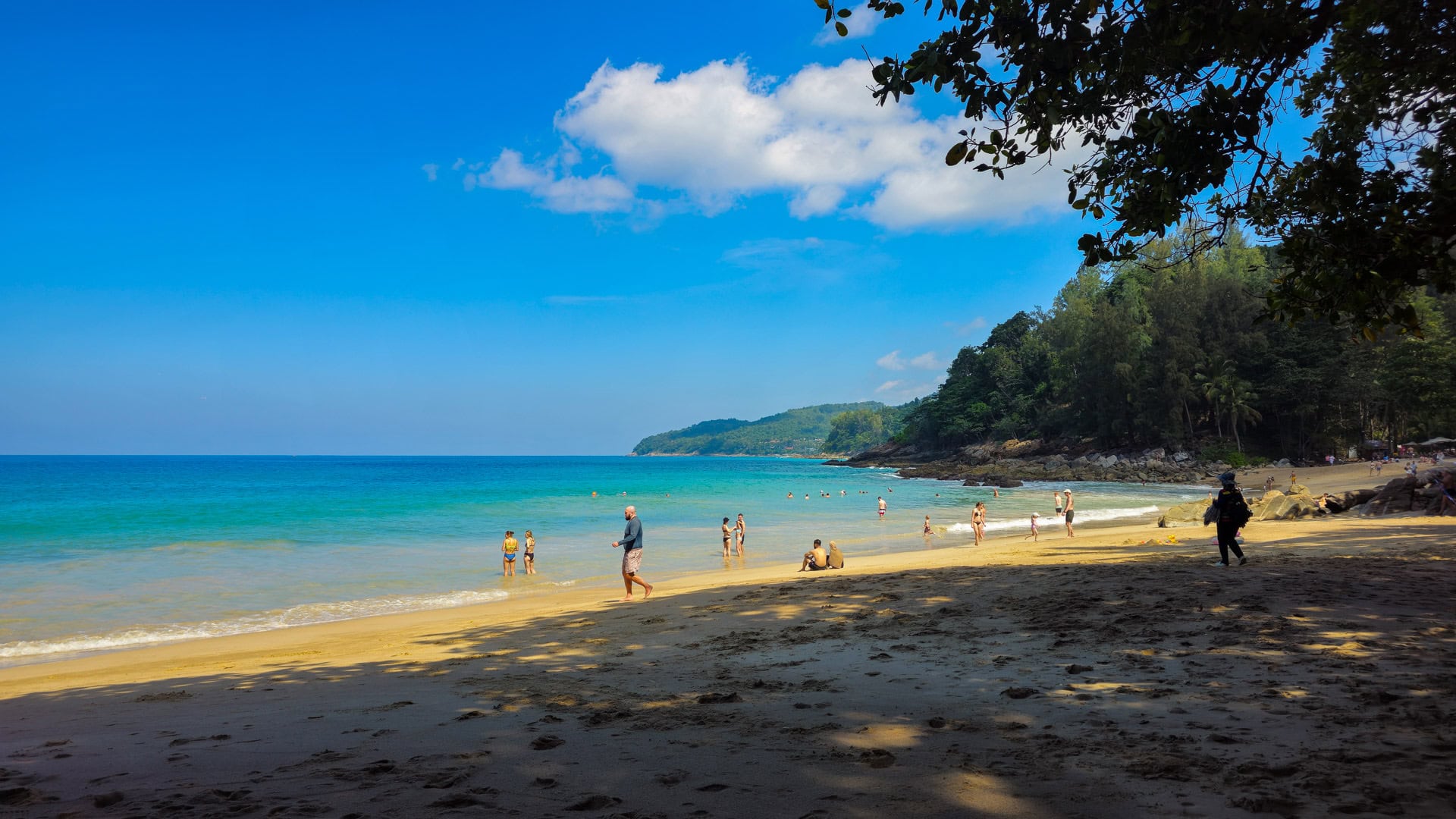
Take a walk towards the northern rocks
One of my favourite parts of Banana Beach is away from the main beach-club area.
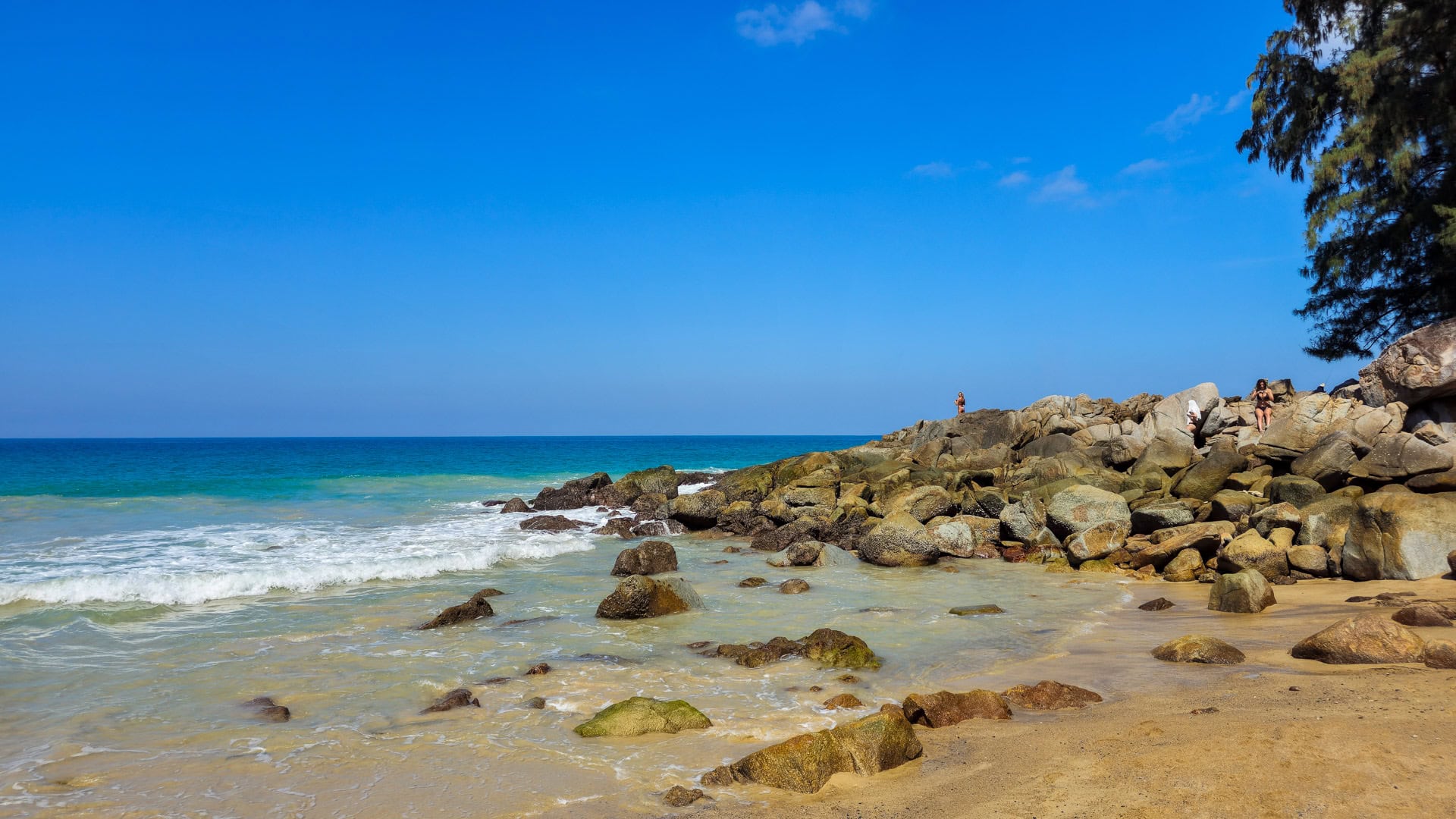
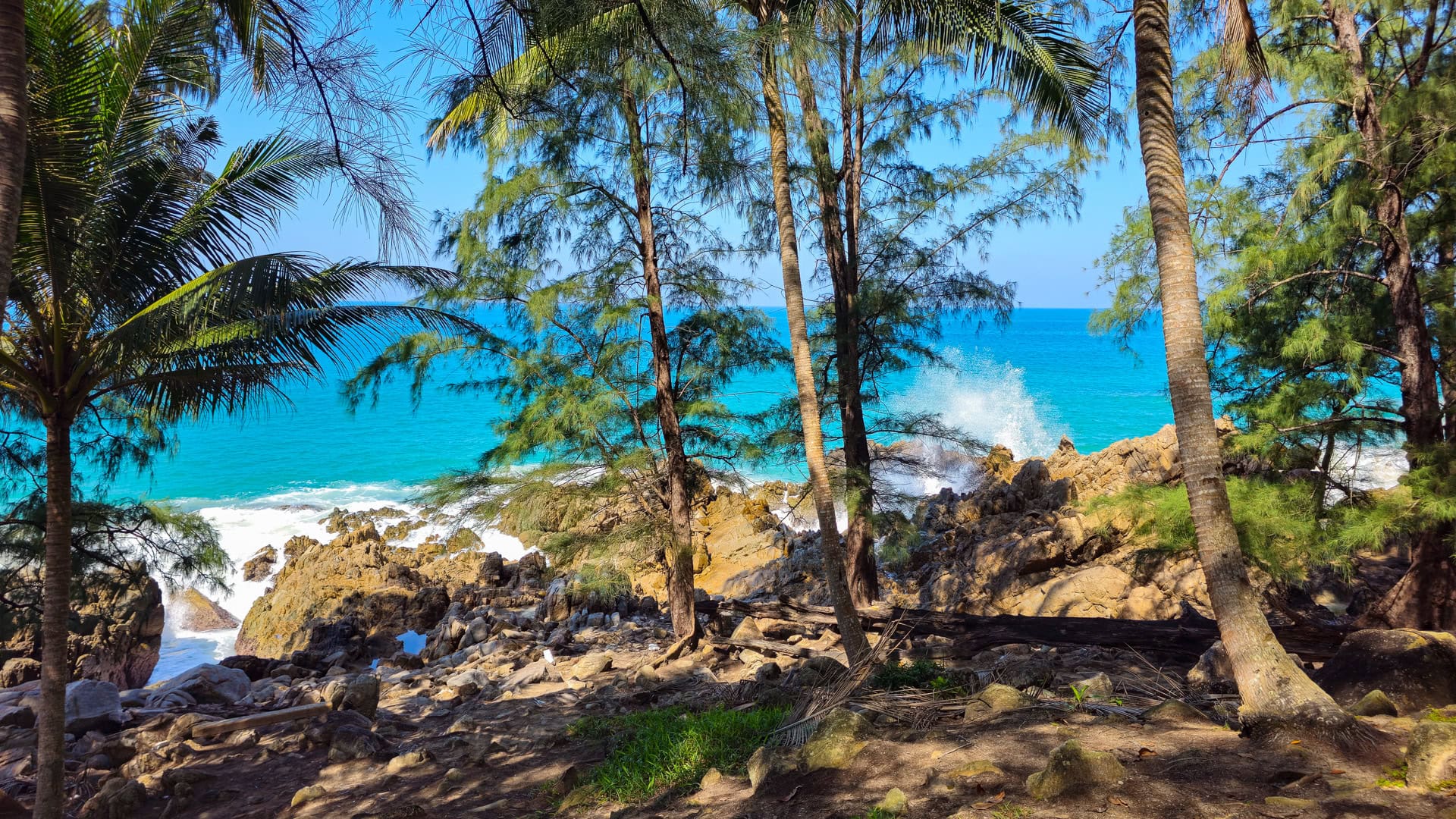
Walk to the northern end of the sand, and you'll reach a beautiful rocky section of coastline. Large boulders lie among the trees, with palms and casuarinas growing close to the water. In places, their roots are exposed among the rocks, and the sea breaks against the uneven shoreline.
It is a fascinating little area to explore, particularly if you enjoy photography or simply looking at the details of a natural coastline.
The rocks, the trees and the changing views of the water give this part of Banana Beach a character of its own. It is quite different from sitting beneath a parasol with a drink, and for me it is one of the best reasons to visit.
There is no properly prepared walking route through the rocks, so take care where you step. Wet rocks and waves breaking against the shore are good reasons not to venture farther.
You do not need to make a major expedition of it. Just walking beyond the main sandy area gives you another perspective on the beach.
Visiting Banana Beach today
Banana Beach is on Phuket's northwest coast, south of White Sands and north of Trisara. The road follows a scenic stretch of coastline, with wooded hillsides and occasional views towards the sea.
The newer parking area provides a more convenient approach than the old roadside parking and steep forest descent. As of November 2026, parking costs THB 550 per day for a car or THB 100 per day for a motorbike. The beach-club facilities, toilets and showers may involve separate charges.
The former steep access route has been reported closed, so older descriptions of how to reach the sand may no longer be reliable.
For swimming, choose a calm day, pay attention to local warnings and avoid the rocky sections when there are waves.
I would certainly recommend Banana Beach. The little bay is beautiful, the swimming can be excellent and the rocky northern coastline is well worth exploring. The new facilities will probably make the visit easier for many people.
I just wouldn't describe it as a secret beach any more.
And there is no need to. Banana Beach is good enough without that label.
Practical information
Banana Beach on Google Maps
Open Banana Beach in Google Maps. This pin marks the beach, not a verified parking entrance.
Common questions
Is Banana Beach still a hidden gem?
The cove remains beautiful, but the large beach club and organised parking have changed its formerly secluded character.
Can you swim at Banana Beach?
Yes, when conditions are calm, using the sandy sections away from rocks. Avoid swimming in rough surf and follow local warnings.
Do you have to pay to visit?
Parking costs THB 550 per day for a car or THB 100 per day for a motorbike (November 2026). Separate facility charges may apply. Parking charges are not a general beach admission fee.
Is this Banana Beach on Coral Island?
No. This beach is on Phuket's northwest mainland coast. The separate Banana Beach on Coral Island (Koh Hey) is reached by boat.
Explore nearby beaches
Continue along the coast to White Beach or Trisara Beach , or explore our Phuket beaches directory . Read our beach safety guide before swimming in unfamiliar conditions.
