
Phuket is a well-established holiday destination for couples, families and solo travellers. A little local knowledge makes it easier to explore with confidence: choose accommodation that suits your plans, agree prices before paying, look after your belongings and know where to find help.
This guide answers the everyday safety questions visitors ask about Phuket, from going out alone and enjoying the nightlife to drinking water, avoiding payment disputes and getting medical assistance.
Last reviewed: 20 October 2026.
Is Phuket safe to visit?
Phuket is a destination you can approach with confidence and sensible preparation. Focus on the decisions that affect your own holiday: where you stay, how you get home after dark, which services you book and whether your insurance covers your plans.
Before travelling, check your government’s current travel advice. During your stay, follow local weather warnings and instructions from the authorities. These checks are particularly useful before excursions or journeys during heavy rain.
For changing conditions, use official travel advice and Thai Meteorological Department warnings.
Is Phuket suitable for solo travellers and women travelling alone?
Travelling independently gives you the freedom to explore at your own pace. Start with accommodation where you feel comfortable arriving, leaving and asking for help.
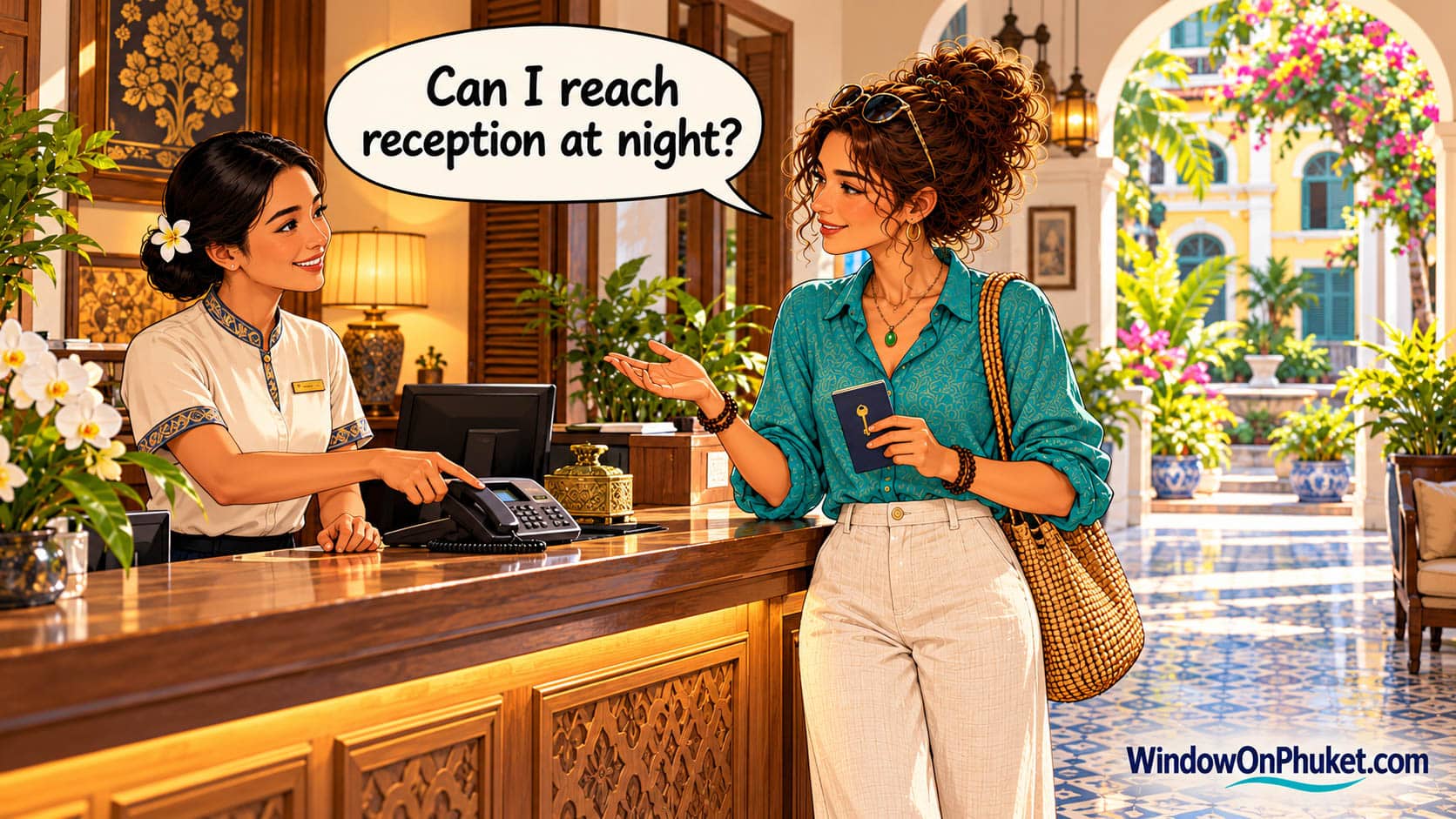
Check whether reception is staffed overnight or has an after-hours contact. Look at the hotel entrance and surrounding streets, particularly if you expect to return late. Save the address on your phone and keep an offline copy.
Let someone trusted know your broad plans. Keep your room number private and check the driver and vehicle details before entering a booked car.
If an invitation or interaction feels uncomfortable, you can decline and leave. A hotel reception, restaurant or other staffed public place is a useful place to ask for assistance.
Is Phuket a good choice for families with children?
Phuket offers plenty of scope for a relaxed family holiday. Choosing the right accommodation and keeping daily plans manageable makes a substantial difference.
Check the room and grounds.Ask about balcony barriers, stairs and direct access to pools. Young children need continuous supervision around water.
Arrange suitable transport.Request the correct child seats before booking and confirm that the provider can supply them.
Build in breaks.Allow time for shade, drinking water and rest between activities. Several short outings may work better than one long day.
Keep useful details together.Save the hotel contact, insurance assistance number and information about allergies or regular medication.
Is it safe to walk around Phuket at night?
Choose a well-lit route with suitable pavements, open businesses and straightforward road crossings. Check the journey back as carefully as the outward walk.
A restaurant may look close on a map but involve an unlit road, a steep hill or a stretch without a pavement. In those situations, arrange a car.
Keep your phone charged and enough money available for the return. If plans change, wait at a staffed venue while organising transport. Avoid walking alone through isolated areas after dark.
What should visitors know about Patong and Bangla Road?
For an enjoyable evening, settle the practical details early: check prices, keep belongings close and decide how you will get back to your accommodation.
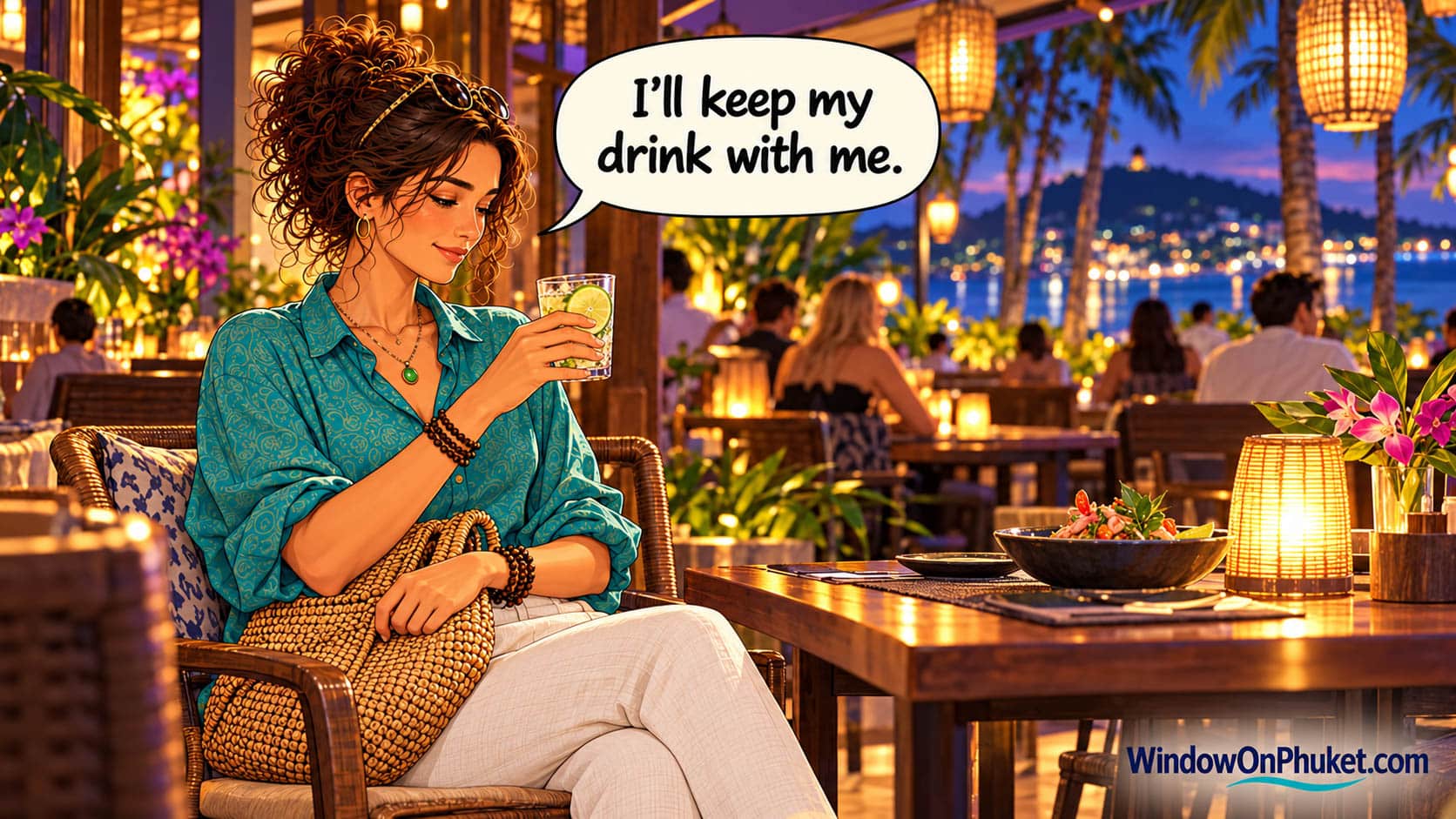
Ask about drink prices, admission charges and any minimum spend before ordering. Keep your drink in sight and avoid accepting drinks from strangers.
If a companion becomes unexpectedly unwell, stay with them and seek medical assistance. Do not assume that serious symptoms are simply the result of drinking alcohol.
If a bill differs from what you expected, ask for an itemised explanation and speak to the manager calmly. Tourist Police can assist when a dispute cannot be resolved.
Which areas of Phuket are safest to stay in?
Choose the specific hotel and its surroundings rather than relying on an area’s reputation alone.
Look for reachable staff, a secure room, convenient meals and a practical way home. Check recent guest comments about the entrance, nearby roads and returning after dark.
Think about your evening routine. If you want to walk to dinner, check the actual route. If you prefer a secluded property, include transport in your plans.
Our Where to Stay in Phuket guide helps you compare locations for different kinds of holiday.
How can visitors avoid scams and payment disputes?
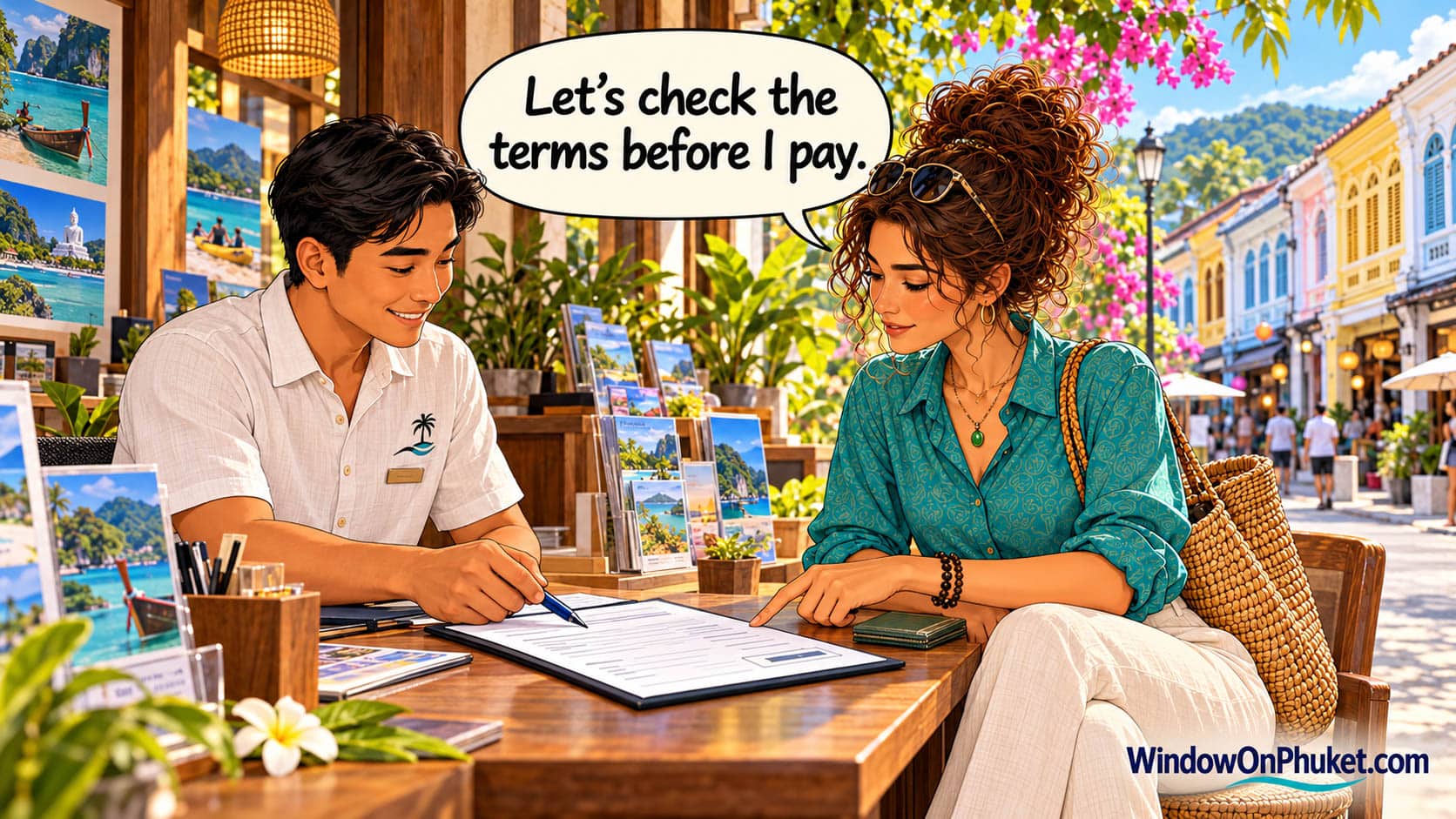
Take time to understand an offer before committing. A clear price and written terms give both you and the business something to refer to.
For a tour or service, confirm the total for everyone in your group, what is included and which extras cost more. Check cancellation terms and keep the booking confirmation.
For a rental, inspect the vehicle or equipment with the attendant. Photograph existing damage and have it recorded on the agreement. Keep the deposit receipt. Your passport should not be left as security with a motorcycle or jet-ski rental business.
Be wary of pressure to pay immediately or accept an unexpected change of plan. If the explanation remains unclear, pause the booking and compare another provider.
How should visitors look after money and valuables?
Carry what you need for the day and secure spare cash, cards and important documents at your accommodation.
Keep bags closed and attended. At a restaurant, place your phone and wallet somewhere you can see and reach them.
Shield your PIN and keep your card in sight during payments. If a card or phone goes missing, contact the bank or service provider promptly to block access.
Can visitors drink tap water, and what about ice?
Choose sealed bottled water or water reliably treated for drinking. Ordinary tap water should not be used as drinking water.
For ice, water quality and hygienic handling matter. Its shape or a hole through the middle does not establish that it is safe. CDC’s Thailand guidance recommends avoiding ice; when uncertain, choose a sealed drink without it.
For choosing meals and food stalls, read Is Street Food Safe in Phuket?.
What health precautions are useful in Phuket?
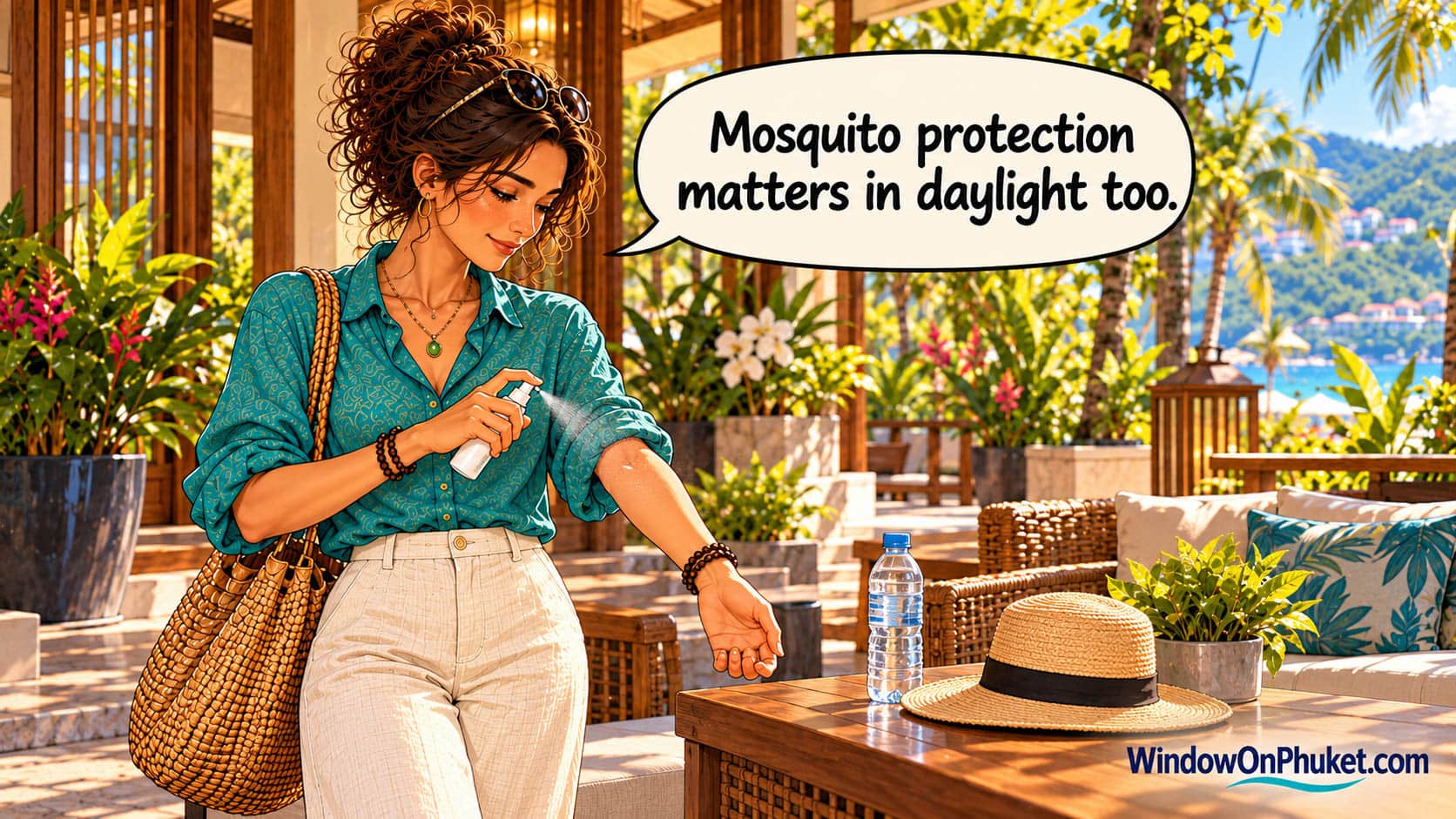
Make drinking water, shade and mosquito protection part of your daily routine.
Dengue occurs throughout the year in Thailand. Protect against mosquito bites during daylight as well as in the evening, and use repellent according to its label. Screened or air-conditioned rooms also help reduce exposure.
If you develop a fever or feel increasingly unwell, seek medical advice and mention your recent travel. Anyone pregnant or planning pregnancy should obtain individual travel-health advice before travelling because Zika transmission occurs in Thailand.
Give unfamiliar animals space. After an animal bite or scratch, wash the wound immediately with soap and running water for at least 15 minutes and seek urgent medical assessment for rabies prevention.
What should visitors know about severe weather and tsunamis?
Check weather warnings before weather-sensitive activities and follow local closures during heavy rain. Avoid entering floodwater.
At coastal accommodation, familiarise yourself with the evacuation route. If you feel strong or prolonged earthquake shaking, notice a sudden unusual rise or fall in sea level, or receive a tsunami warning, move inland and to higher ground immediately. Natural warning signs require action even before a siren sounds.
Our weather and seasons guide explains how conditions affect holiday planning.
Which local rules should visitors check before travelling?
A few checks before packing can prevent difficulties on arrival.
Vapes and e-cigarettes:leave them at home. Thailand prohibits their import, and restrictions also cover sale and possession.
Cannabis:cannabis flower requires a valid prescription issued in Thailand. A visible shopfront does not establish that recreational purchase or use is permitted.
Prescription medicines:check the actual medicine through the Thai FDA traveller service. Some controlled medicines require permission before travel.
Travel documents:keep a secure passport copy and know where your original is stored.
What about swimming and getting around?
These subjects deserve their own practical guides.
For swimming, follow beach flags and lifeguard instructions. A red flag means stay out of the sea. Read Beach Safety in Phuket for the details.
For taxis, booking apps, buses and vehicle hire, use Getting Around Phuket. Arrival arrangements are covered in the Phuket Airport Guide.
Should visitors arrange travel insurance?
Yes. Choose a policy that covers your health needs and the activities you intend to do.
Read the conditions for motorcycle travel, water sports and other planned activities. Check medical treatment and evacuation cover, and declare relevant existing conditions.
Save the policy number and assistance contact offline. If treatment is needed, keep medical reports and receipts, and contact the insurer as soon as practical. Urgent medical assistance comes first.
Where can visitors get help?
Save these numbers before heading out:
1669 — medical emergency
191 — police emergency
1155 — Tourist Police assistance
Give a clear location: the hotel or venue name, road, nearby landmark and a callback number. Have a map pin ready if requested. Nearby staff may be able to help explain the address.
For a lost or stolen passport, contact your embassy or consulate about replacement documents. Block missing bank cards promptly and obtain any reports required by your insurer.
Before heading out: six useful checks
- Save your accommodation address and useful contacts.
- Know how you will get home.
- Charge your phone and carry a way to pay.
- Keep valuables close and spare documents secure.
- Carry drinking water and suitable sun and mosquito protection.
- Check relevant weather warnings and confirm booking details.
For wider preparation, continue with What to Know Before You Go or explore the Essential Phuket Travel Guides.
