
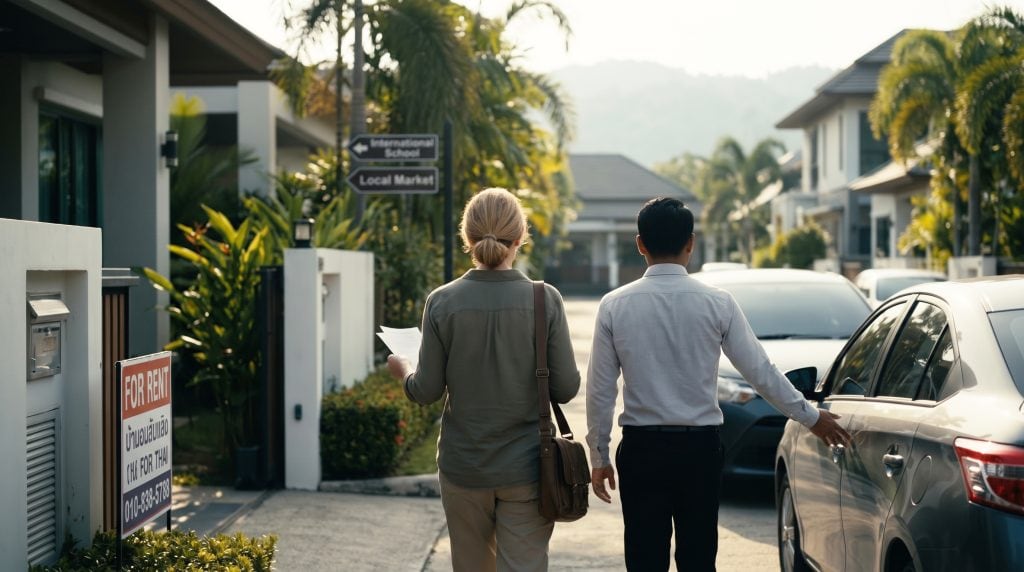
Stricter scrutiny of nominee shareholding is changing the way many foreign residents approach Phuket property. Rather than abandoning the opportunity to live in paradise because of concerns about ownership, a growing number of would-be residents are choosing to rent, creating new pressures, opportunities and uncertainties across the long-term rental market.
A Change in Confidence
Phuket’s property market has always moved in cycles, but the change now taking place may be more fundamental than a normal rise or fall in sales. It is a change in the way foreign residents think about risk.
For many years, some foreign buyers were advised that establishing a Thai company offered a simple route to controlling a villa and the land beneath it. A genuine Thai company, with real Thai shareholders, legitimate commercial activity and proper governance, is one thing. A company created merely to place Thai names on a share register while the foreigner supplies the money and exercises the real control is something entirely different. Nominee shareholding has always been illegal, but the recent enforcement campaign has made the danger far more visible.
Coordinated investigations involving the Department of Business Development, the Department of Lands and other government agencies have brought nominee structures firmly into the spotlight. The message is increasingly difficult to misunderstand: documents that look correct on the surface may offer little protection if the underlying arrangement is not genuine.
This does not mean that foreigners have suddenly lost their desire to live in Phuket. The reasons people choose the island remain remarkably strong. Phuket offers international schools, quality healthcare, global air connections, established communities, excellent restaurants, marinas, golf courses and a lifestyle that is difficult to replicate elsewhere in the region.
What has changed is the willingness of many people to accept uncertainty in order to own a home.
Renting Becomes a Strategic Choice
For a growing group of foreign residents, renting is no longer simply a temporary solution or something they do while deciding whether they like Phuket. It is becoming a deliberate strategy.
Renting allows someone to enjoy the lifestyle without committing a large amount of capital to a structure they may not fully understand. It gives families time to choose the right area, test journey times to schools and workplaces, experience both the wet and dry seasons, and wait for greater clarity before making a long-term purchase decision.
It also separates two decisions that were previously treated as one: the decision to live in Phuket and the decision to own property in Phuket. A person can be completely confident about the first while remaining cautious about the second.
Renting is not completely without risk. Tenants still need a clear agreement, confirmation that the landlord has the authority to rent the property, and a proper understanding of deposits, maintenance, utilities, notice periods and renewal terms. However, these risks are usually narrower and easier to manage than the legal and financial exposure involved in an unsuitable ownership structure.
The result could be a substantial new pool of tenants who have the means to buy but currently prefer the flexibility and relative simplicity of renting.
Will Rents Rise or Fall?
This is where the picture becomes more complicated. Rising rental demand does not automatically mean that rents across Phuket will rise. Supply is moving at the same time, and several opposing forces are now at work.
On one side, more would-be purchasers may enter the long-term rental market. This could place upward pressure on the best homes, particularly modern villas and larger condominiums close to international schools, lifestyle centres and established year-round communities. The supply of high-quality family homes offered on sensible terms is not unlimited, even on an island with a large volume of property.
On the other side, slower villa sales may encourage developers and private owners to place more unsold or unused properties on the rental market. Some homes previously aimed at short-stay visitors may also move towards longer agreements as enforcement around accommodation licensing becomes stricter. Both trends could increase the number of available rentals and place downward pressure on prices.
Recent market reports point to fewer new villa launches, slower villa sales and a growing volume of remaining stock. This does not necessarily translate directly into long-term rental supply because a property designed for sale or holiday use is not automatically suitable for a family seeking a well-managed home for a twelve-month tenancy. Nevertheless, it gives owners and developers a strong reason to consider rental income while waiting for sales conditions to improve.
The most likely outcome is therefore not a single direction for Phuket rents, but a more divided and selective market.
Well-located, correctly priced and professionally managed properties should remain resilient. Homes with practical layouts, reliable maintenance, suitable furniture, reliable internet, storage, parking and clear pet policies are likely to attract serious tenants. Properties with unrealistic asking prices, poor management or obvious maintenance issues may sit empty, regardless of how strong the general demand appears.
Phuket Has Property, but Not Always the Right Property
One of the most important distinctions in this emerging market is the difference between total supply and usable long-term supply.
Phuket may appear to have an enormous number of villas and condominiums, but much of that stock was created for investors, holidaymakers or short-term occupancy. A family moving to the island for several years has different priorities. They may need a proper family kitchen, storage space, a home office, covered parking, practical bedrooms, dependable maintenance and reasonable access to schools.
Similarly, an attractive one-bedroom holiday condominium does not meet the needs of a family of four, while a spectacular luxury villa may be beyond the budget of most long-term residents. Demand can therefore rise alongside visible vacancy because the available properties and the requirements of tenants do not always match.
This mismatch may become the defining feature of the next phase of Phuket’s rental market. The strongest demand may concentrate around a relatively limited group of homes that genuinely work for everyday living.
This Is Not the End of the Sales Market
It would be a mistake to interpret the rental shift as the end of foreign property purchasing in Phuket. Foreign freehold condominium ownership remains a recognised option when spacious luxury units can provide the same living experience as a villa while also meeting all legal requirements. There are also legitimate ways for foreigners to secure long-term rights to villas when the structure is carefully created, the developer cooperates fully and independent legal advice is obtained.
Some tenants will ultimately become buyers after they understand the island, identify the right property and receive credible advice. Renting may therefore become the front door to a future sale rather than a rejection of ownership altogether. The sales cycle may take longer, but the eventual purchaser should be better informed and more selective.
A Market Built Around Certainty
Phuket’s appeal has not disappeared. People still want to live here, raise their families here, retire here and spend meaningful parts of their lives here. The present uncertainty concerns the safest way to secure that lifestyle, not the desirability of the lifestyle itself.
That is why the most important question may not be whether rental prices will rise or fall. The better question is which properties will attract this new generation of cautious, well-informed tenants, and on what terms.
The next Phuket property cycle may focus less on ownership at any cost and more on legal clarity, flexibility, liveability and professional management. If that happens, renting will no longer be viewed as the second-best alternative to buying. It will become one of the central pillars of the island’s residential market.
by Thai Residential Phuket Property Guide
This article is from the Thai Residential Phuket Property Guide.
To download the 2025/2026 Guide visit ThaiResidential.com
Thai Residential Co. Ltd.
82/37 Sam Pao Courtyard, Moo 4, Patak Rd., T. Rawai, Phuket 83130
094 841 1918
thairesidential.com
