
Black Rock,
and the Hill Behind It
A short forest climb above Nai Harn opens onto one of Phuket’s finest coastal views. Stay for the panorama, then give the hill itself some time: a working rubber plantation on its slopes, cafés and coastal openings along the dirt road, and a Buddhist park built around a golden statue of Luang Pu Thuat.
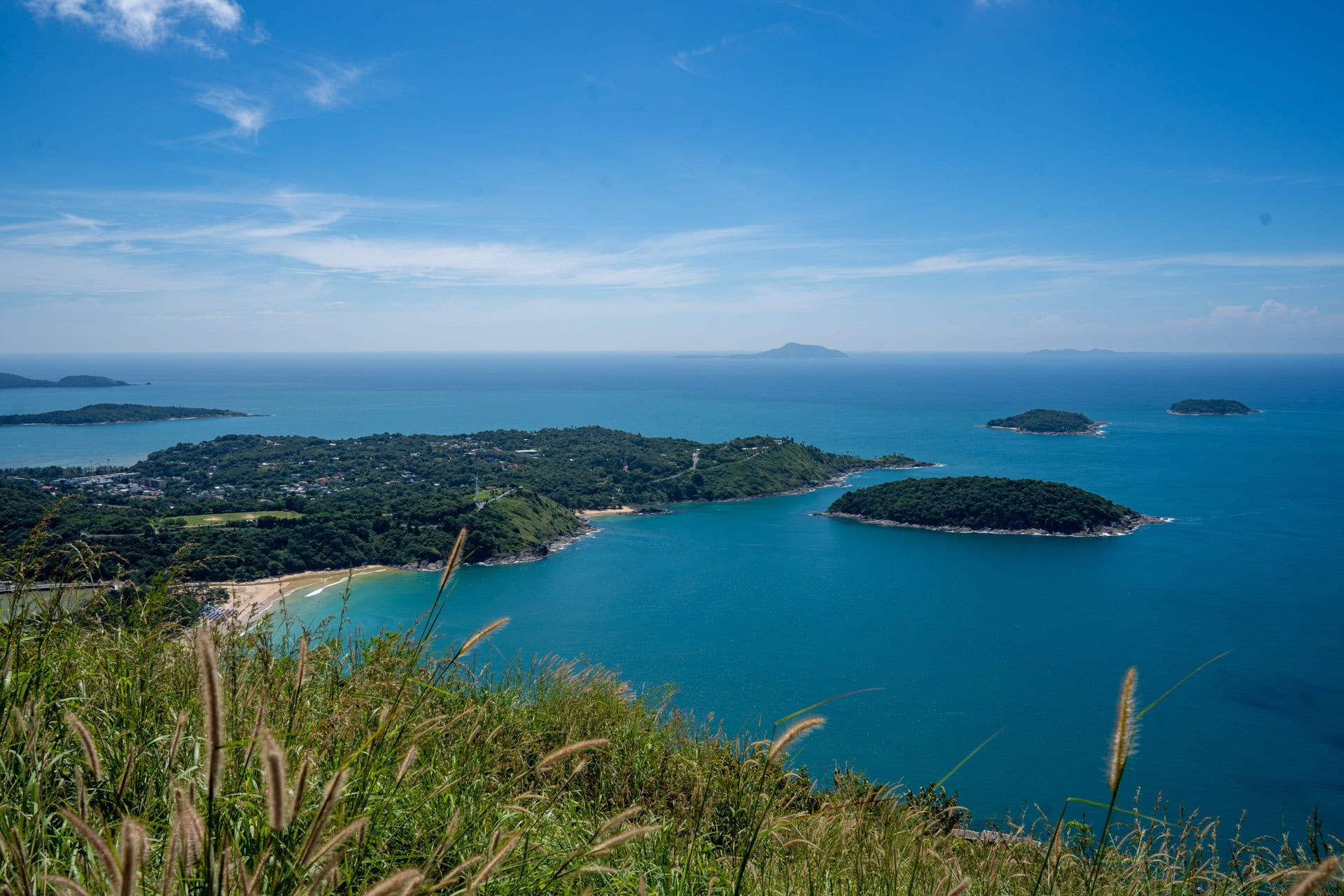
The road to Black Rock is unpaved, and that is the first thing it has going for it. It leaves the tarmac above Nai Harn and drops through forest towards Nui Beach, and somewhere along it, where I was able to pull the car in close, a footpath leaves the road and heads uphill under the trees.
The climb is short. The forest stays tight around the path, so you arrive without warning: the trees stop, the ground turns to rock and grass, and the south of the island is suddenly laid out below you with nothing in the way.
Nai Harn's beach is the anchor, a pale curve at the head of its bay with wooded land closing it on either side. Beyond it the coast keeps going, headland after headland reaching into the sea, and beyond the last of them, islands. A Thai flag stands at the viewpoint. What the height gives you is continuity. From the road, this coast is a series of separate arrivals: a beach, a car park, a bend, another beach. From Black Rock it is one line, and you can run your eye along it from the bay at your feet to the islands at the edge of sight and understand for the first time how it all joins up.
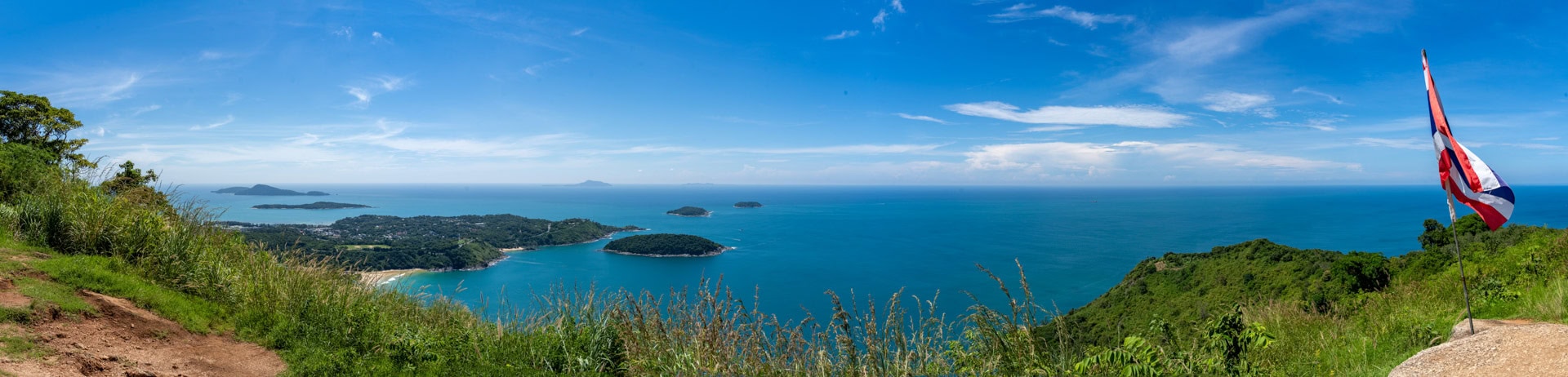
I stayed longer than I had meant to, and then made the decision that shaped the rest of the day. Behind the viewpoint, a second trail leaves the summit, wider than the path I had climbed, with lengths of coloured ribbon tied along it at intervals. I took it, assuming it looped back to the road.
Within minutes the open slope was gone and the forest had changed. The trees were rubber. Every trunk I passed carried the same marks: a diagonal cut scored down through the bark, and beneath it a small cup fixed to the tree to catch what ran out. Dozens of trunks, each one tended, each one yielding. Nothing about the panorama had suggested this. From the top the hillside reads as unbroken forest; from inside it, the same slope is an orchard, and the trail you are walking is a track for whoever comes to empty the cups.
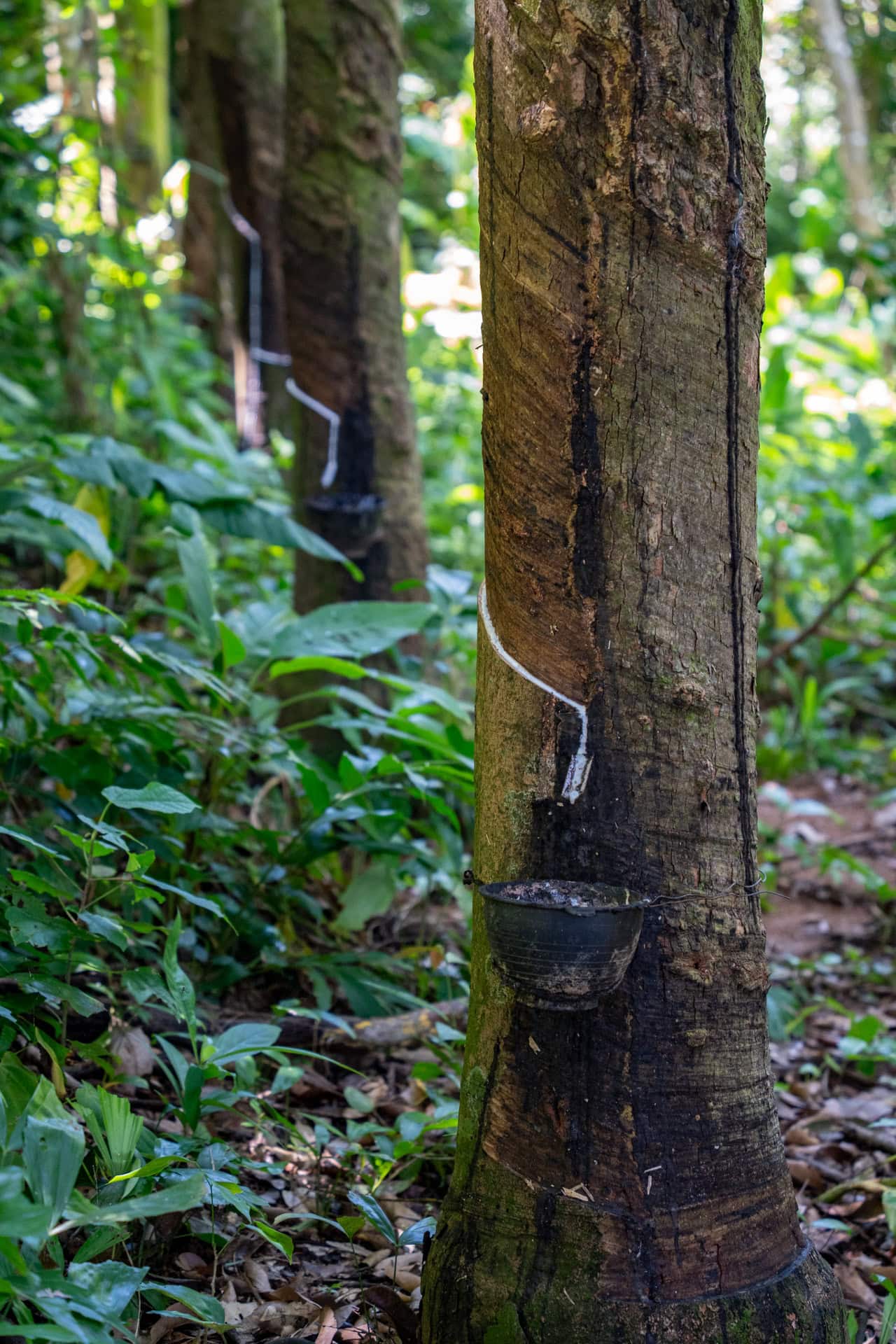
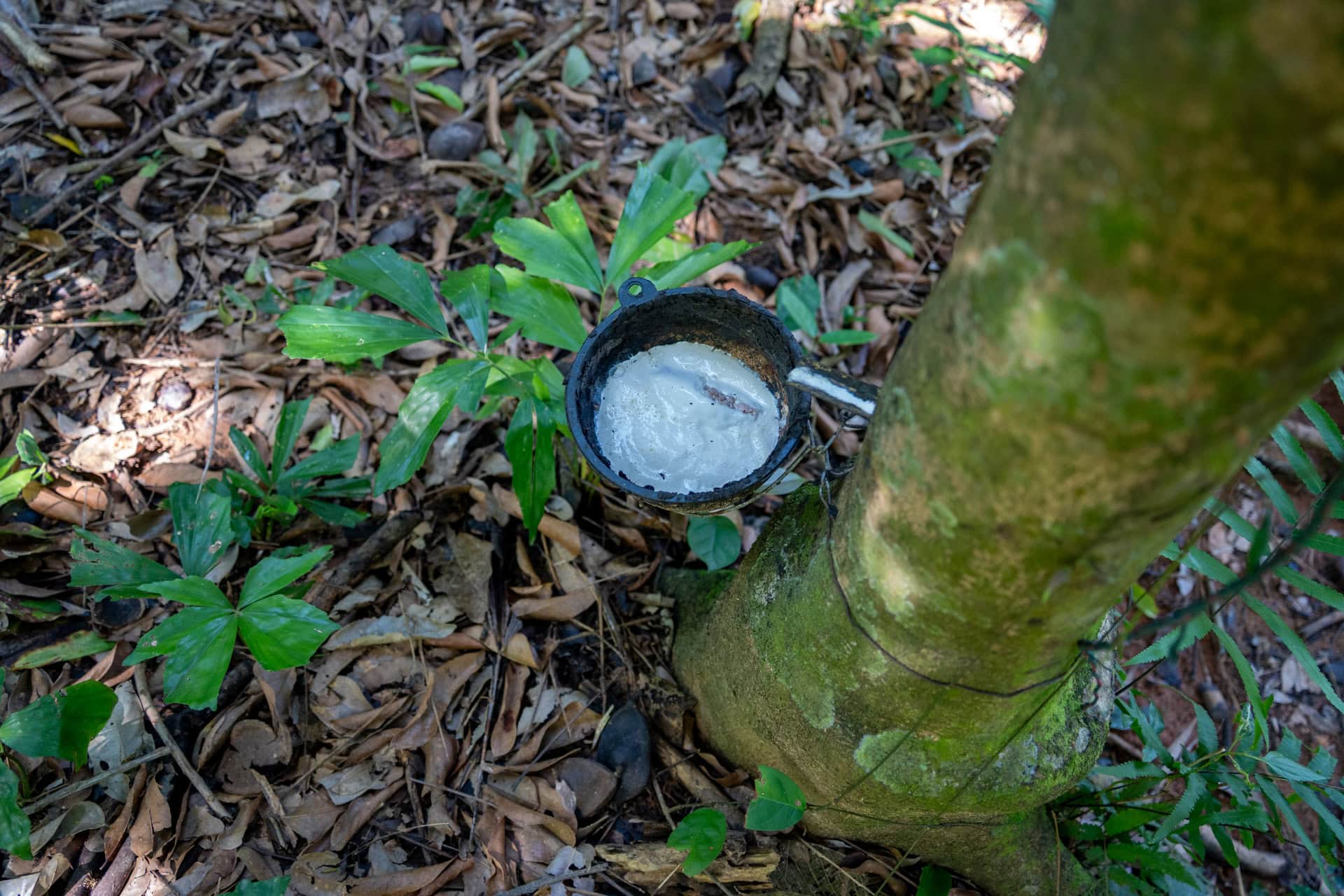
The ground told its own story. Rain had carved deep channels through sections of the path, the red earth cut away to the depth of a boot in places, and the walking slowed to a careful step from one firm patch to the next. It was the most absorbing hour of the day: the forest close on both sides, the tapped trees in every direction, the sea entirely out of sight.
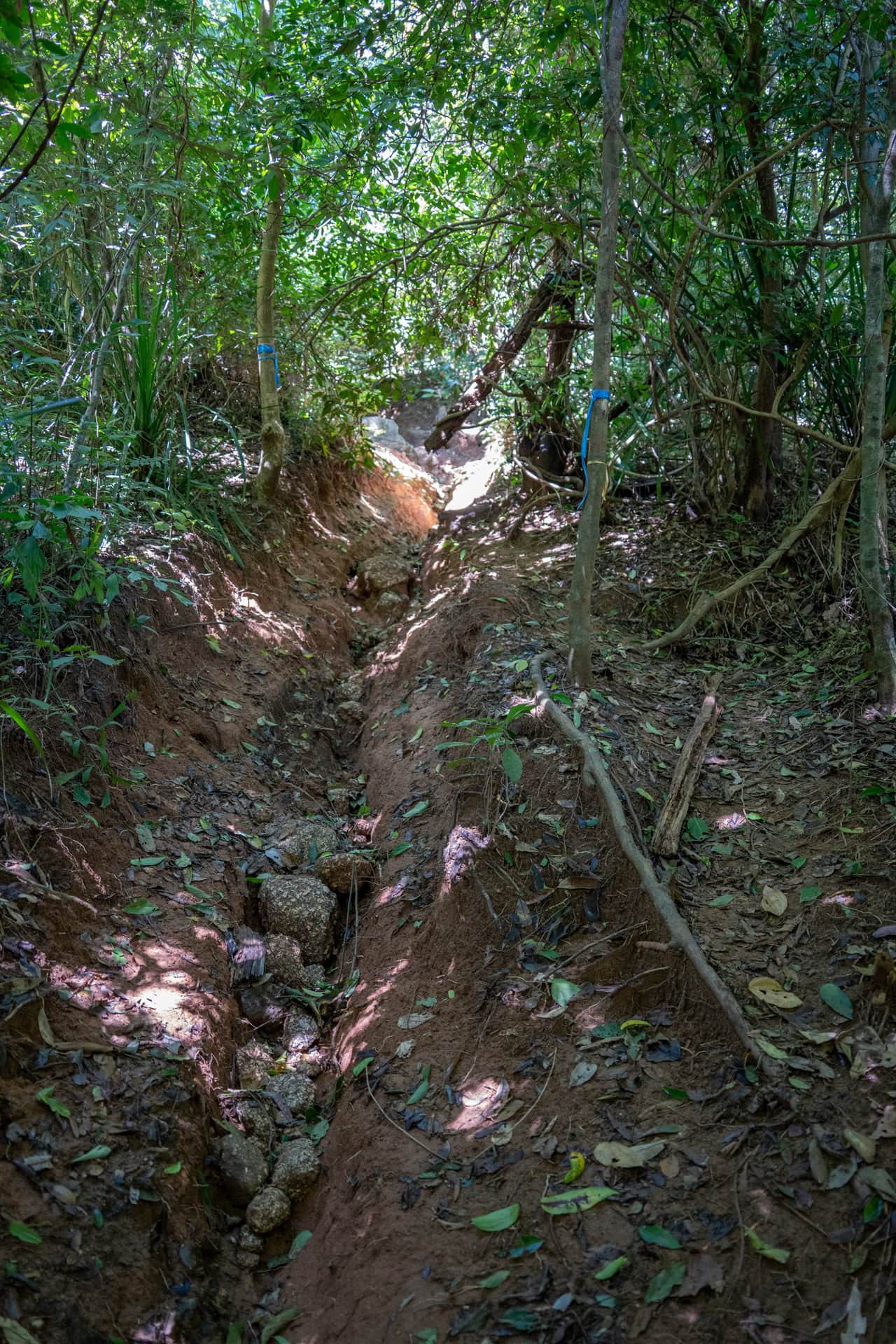
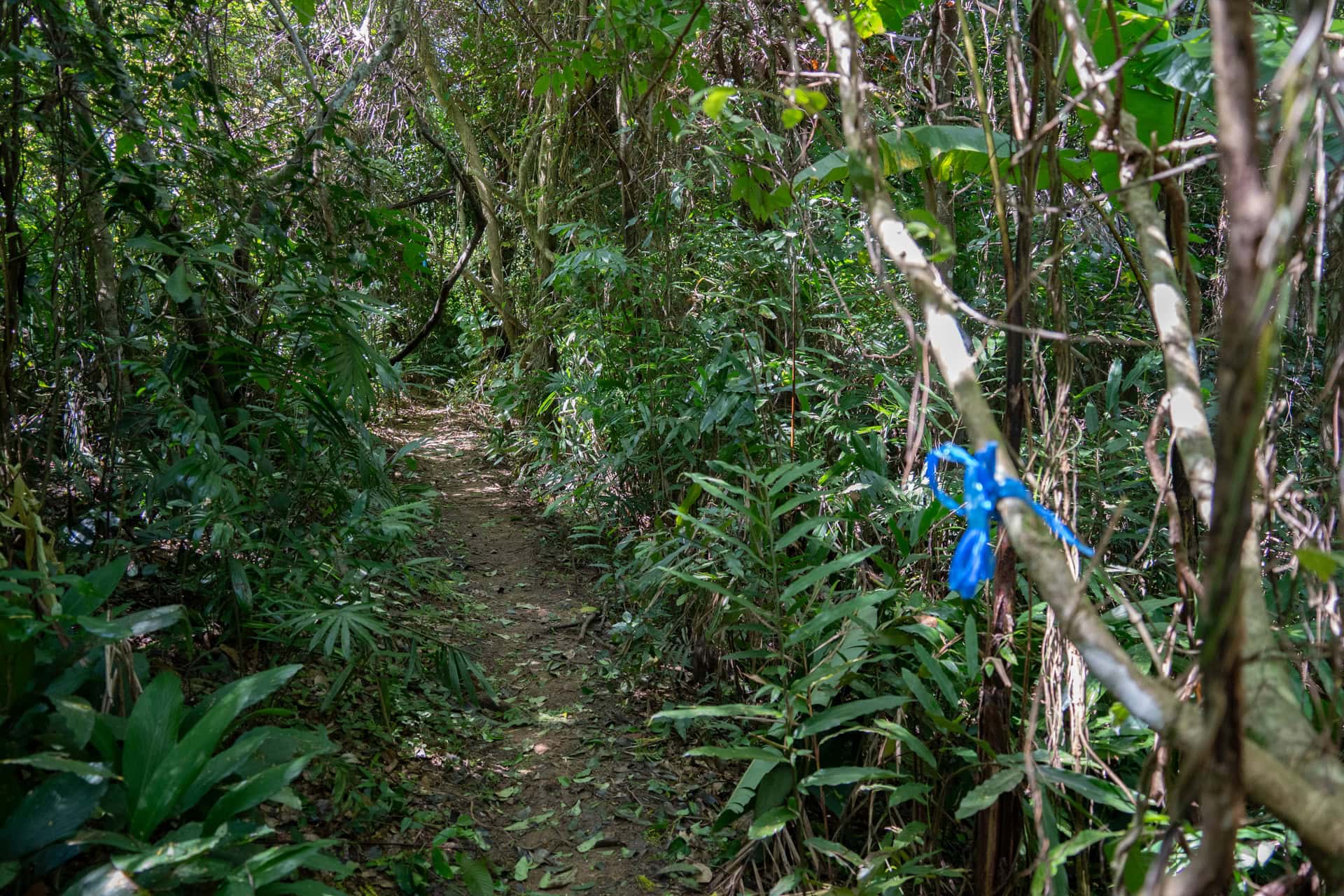
After roughly an hour the trail delivered me to a road in the Nai Harn area. My car was on the other side of the hill, up the Nui Beach access road, and walking back to it took more than another hour, almost all of it uphill and in full afternoon heat. At the transport parking area on the access road I sat down, and a taxi driver waiting there handed me a bottle of water without my asking. I must have looked as though I needed it.
That walk is worth taking. It is not worth taking by accident. With a lift arranged at the Nai Harn end, it is an hour of forest and plantation. Without one, it is an afternoon.
The access road deserves the attention I had too little energy left to give it. There are cafés along it, and gaps in the trees where the sea shows through. And just before King Kong Café stands a Buddhist park that Google Maps lists as อุทธยานธรรมหลวงปู่ทวด หาดนุ้ย, roughly Luang Pu Thuat Dhamma Park, Nui Beach.
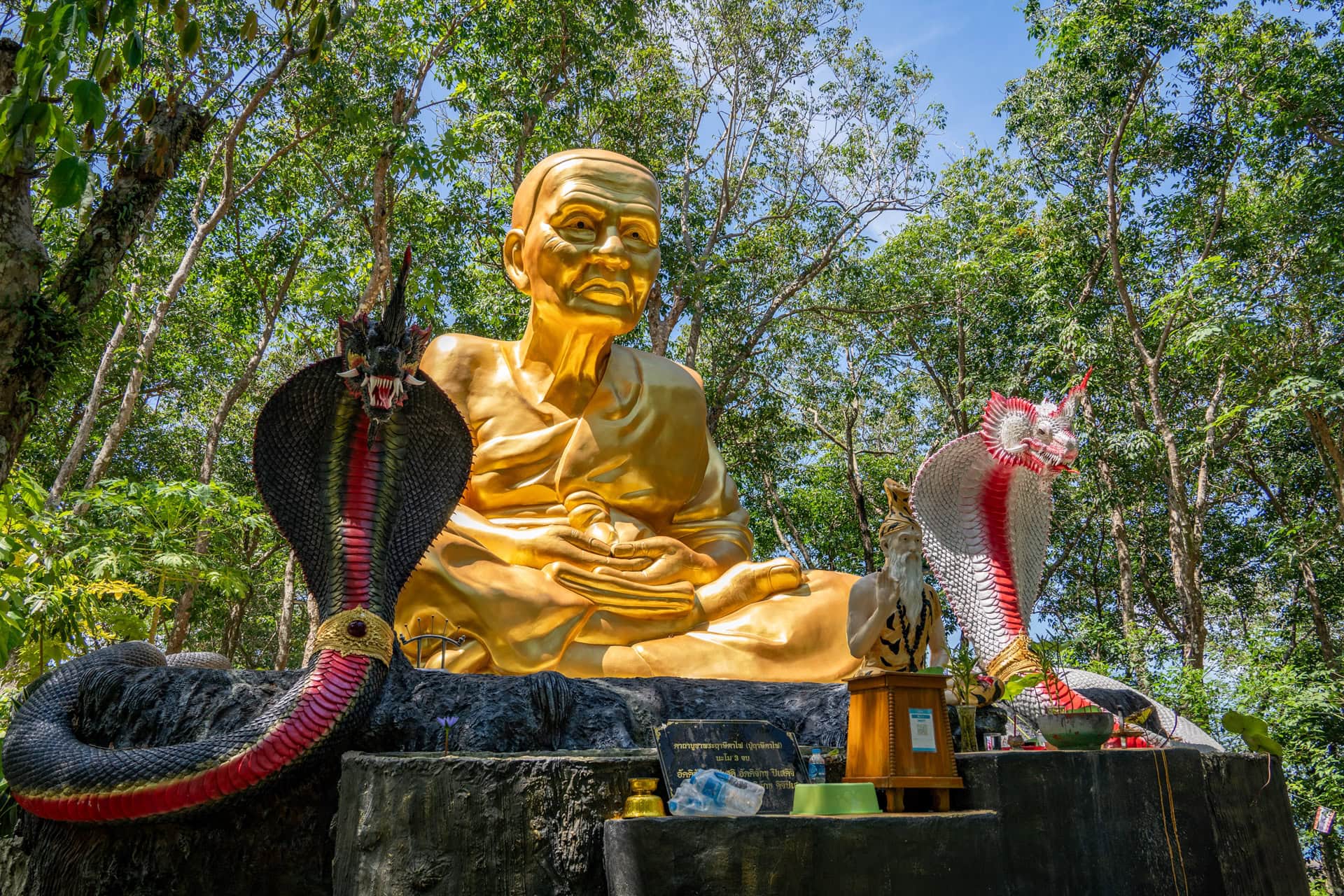
Luang Pu Thuat is among the most venerated monks in southern Thailand, and the park is built around him: a large golden seated figure among the trees, flanked by naga serpents, with shrines, smaller religious figures and a handful of buildings set beneath the canopy. From the grounds, the trees open again onto the coast. This is a place of practice rather than display. The monk associated with it, Phra Ajarn Mongkol Mangkalo, is connected to a monastic centre, Samnak Song Tham Wang Badan, in Surat Thani; groups come here to pray, and donations of religious objects have been documented. Visitors should treat it as a place of worship: cover shoulders and knees, and treat the figures as what they are.
Back at the top of the hill, standing by the flag with the whole coast in front of you, there are two ways into the trees. One of them is the path you came up. Take that one, and the day stays the size you planned.